





Ini-Oluwa Adegbayi ’28
News Editor
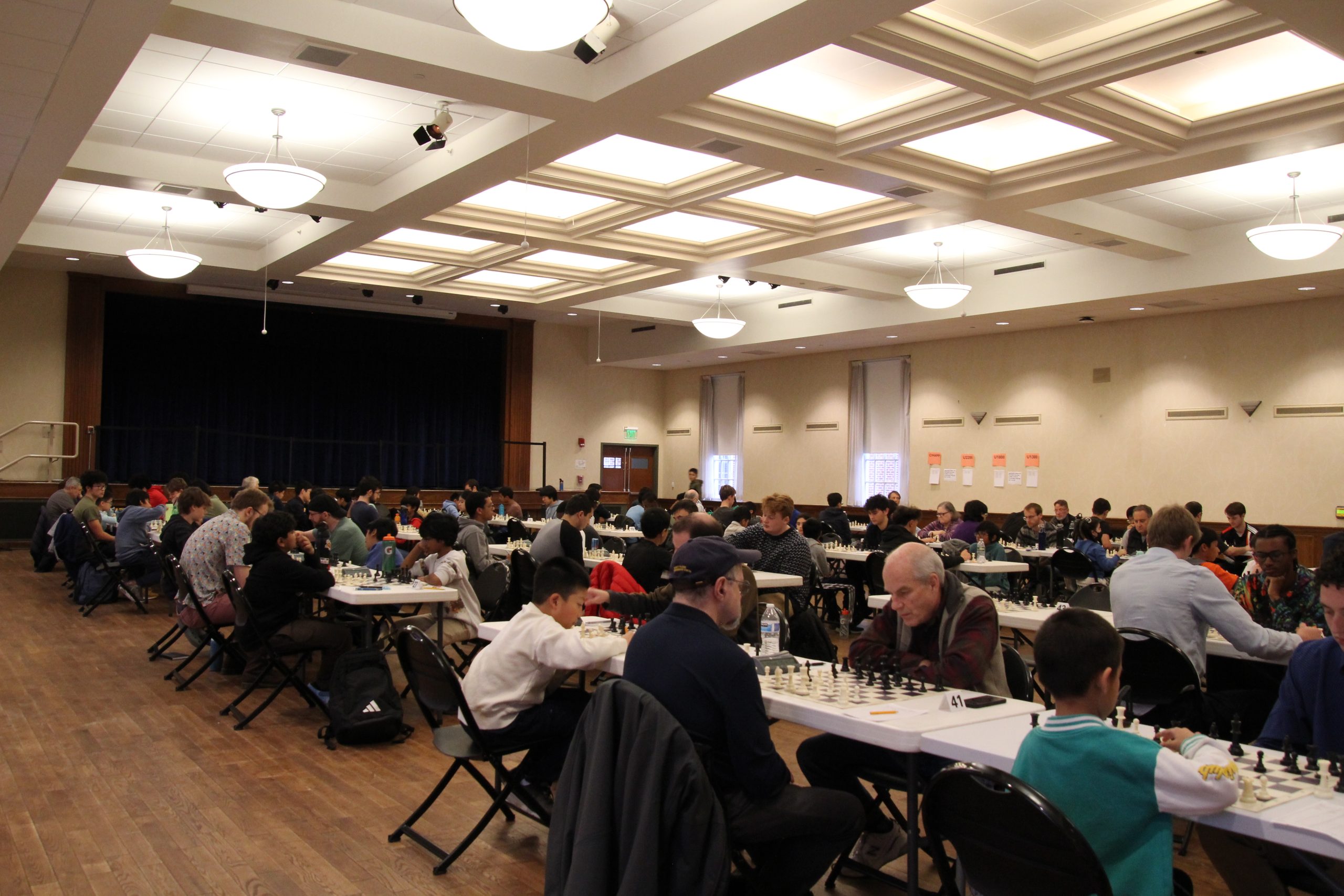
On Sunday, Nov. 9, 2025, Trinity College Chess Club, in collaboration with the Connecticut State Chess Association (CSCA), hosted a chess tournament in the Washington Room, Alumni Lounge and Terrace Rooms in Mather Hall. Connecticut State Chess Association is a nonprofit corporation, a U.S. Chess State Affiliate under the U.S. Chess Federation.
In 2022, after years of inactivity, now senior Teddy Fleming ‘26 reignited the Chess Club, rebuilding and bringing back competitive chess back to Trinity. Fleming, now the club’s president, has worked to establish consistent meeting times and expand membership. The CSCA provided Trinity College Chess Club with tournament essentials — boards, clocks and pieces. Their arbiters handle any disputes, and they’re the governing body for collegiate tournaments. The association also helps Trinity host officially recognized collegiate tournaments, marking a major step forward for the club.
As club president, Fleming has focused on creating a more structured and consistent environment for players. “We’ve set more consistent meetings and revamped the team,” he said. “It’s not just about competing — it’s about creating a space for anyone interested in chess.” Trinity has hosted several tournaments, including the Connecticut State Championship, the Open State Tournament and regional competitions. This year’s event drew 129 registered participants, including two grandmasters and 17 titled players, making it one of the most competitive tournaments held at Trinity to date. The tournament offers a $5,000 prize pool distributed across various rating sections. The Open/Championship section includes the strongest players and a top payout (up to $750 for first place), a second place section and a third place section with monetary awards for the top three participants in each section and a physical trophy.
For Fleming, one of the most rewarding parts of being an organizer of the tournament is seeing how diverse the chess community can be. “Chess is a great unifying game because it brings everyone together,” he said. “Participants range from four or five years old up to seniors in their seventies. A lot of parents are starting to have their kids play because it’s great for cognitive development and strategic thinking. The average participant is probably around twenty, but there’s such a wide range; chess brings talent from all over.” A participant of the tournament and member of the club Maria Markosyan ‘26 said, “The tournament was a really good space, and it was nice that people from Connecticut and out of Connecticut played, you get to meet people from other places that you wouldn’t otherwise meet. For example, I was playing against a seven-year old. It’s a good place of camaraderie.”
Beyond competition, Fleming wants the Chess Club to serve as a resource and community for Trinity students. “Generally, the Trinity Chess Club is a great resource for people to use. One of the reasons I restarted it, and made such an effort to grow out the club is because we always notice people in the library or in class playing chess on their computer, but the Trinity Chess Club offers a more personalized and open experience to play chess. We also have a faculty advisor who is an exceptional player and he functions as our coach. If you’re a beginner and want to learn how to play, or you’re a somewhat experienced player and want to get better, we have resources for that. The Chess Club, as well as the participants, offer a very wide and diverse perspective.”



+ There are no comments
Add yours