Carlos Fonseca ’30
Staff Writer
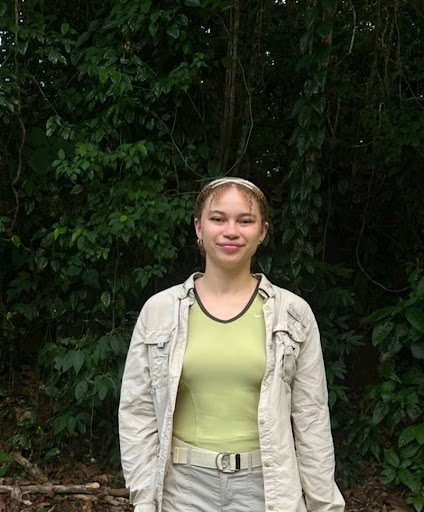
Maya Kajikawa ‘27 is a neuroscience major and Japanese minor whose research examines HIV’s effects on brain health. Through her research, she developed a passion for combining laboratory work with a career in medicine. I had the pleasure of speaking with her about her research, how it has shaped her plans and her advice for students interested in scientific research.
Kajikawa’s introduction to research came through Trinity’s Interdisciplinary Science Program, which allowed her to begin working in a biology laboratory during the spring of her first year. Her current research focuses on HIV-associated neurocognitive disorders, known as HAND. Kajikawa explained that although HIV is commonly associated with its effects on the immune system, her research examines how it affects the brain and cognitive function. She emphasized that neurological health remains an important concern for people living with HIV, including those receiving treatment for the virus.
Her research experiences have also expanded her career interests. Kajikawa plans to pursue medical school and is considering an MD–PhD program, which would allow her to combine patient care with research.
Kajikawa had not initially planned to study HIV specifically. Instead, her interests in aging and neurological disorders drew her toward research involving the brain. She was particularly interested in preclinical work, which uses models such as cells and animals to investigate biological processes before potential approaches are studied in people.
Beyond her work on HIV, Kajikawa explained that one of the most surprising aspects of research has been its collaborative nature. Throughout her research experiences, she found professors, students and other researchers willing to answer questions and offer guidance. “I’ve been mentored by everyone in my lab,” she said.
For students who feel intimidated by STEM, Kajikawa emphasized the support that is present within a laboratory. She explained that finding a lab where she felt comfortable with the people around her made a demanding workload a positive experience. “The work is difficult, and sometimes very tiring, but I also was excited to go,” she said.
Kajikawa also explained that experiments often do not work or produce results that differ from what a researcher expected. However, those challenges make successful moments especially fulfilling. “When something goes right, it’s the most rewarding thing ever,” she said.
Although structured summer research programs offer valuable opportunities, Kajikawa explained that their competitive application processes are not the only way to get involved. For underclassmen interested in research, Kajikawa encourages reaching out directly to professors and laboratories. She suggested looking for opportunities near where students plan to spend the summer, even if they do not already have a connection to the institution.
Contacting professors directly can also lead to mentorship and experience. “Email them, email them, email them,” Kajikawa emphasized. “More professors respond than you expect.”
After speaking with Kajikawa, what stood out most to me was how research had broadened her plans for the future. An opportunity she pursued during her freshman year has helped shape her career goals beyond Trinity; for underclassmen on a similar path, her advice offers a good place to start: find a professor whose work interests you and reach out. As Kajikawa’s experience shows, you do not need to know exactly where an opportunity will take you before pursuing it.