Sajja Ranjit ‘29
Executive Features Editor
In an increasingly polarized political climate, with the Trump administration continuing to reshape higher education through federal funding cuts and efforts to influence campus policies, questions surrounding the independence of academic institutions have taken on renewed urgency.
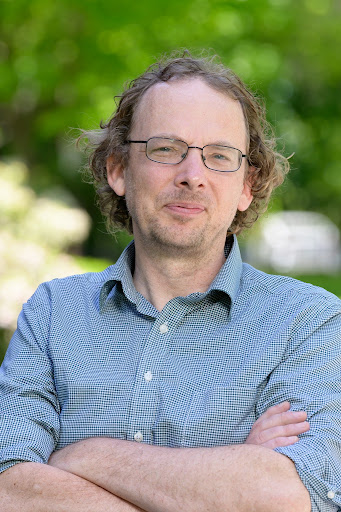
Against this backdrop, Professor of Political Science Isaac A. Kamola’s work examining the relationships between political power, economic interests and higher education has taken on renewed significance. “Political forces and economic forces are deeply intertwined with each other,” Kamola told the Tripod. This connection, which first drew him to the topic of political economy as an undergraduate student at Whitman College, continues to shape his scholarship and work at Trinity.
Kamola first encountered political economy in a course that examined the work of Adam Smith and Karl Marx. Studying the two thinkers side by side gave him a framework for understanding the political and economic debates beyond the classroom into everyday life. “That class more than just about any other really helped me explain the world,” Kamola said. “I could read the newspaper. I could see the political debates that were taking place and understand the different kinds of arguments that were being made.” The experience continues to shape his approach to teaching political economy, a subject he plans to teach again in the spring.
Political economy, as Kamola describes it, challenges the idea that markets and politics operate independently of one another. Instead, it emphasizes that the two are closely connected: political institutions create the rules and conditions that shape how markets operate, while economic relationships influence how political institutions distribute resources and exercise power. “There is nothing like a kind of a naturally existing market that free floats kind of out there in the world,” Kamola said. Instead, he argues, markets are shaped by political decisions and institutions, just political systems are influenced by economic relationships.
This understanding also intersects with Kamola’s research into higher education, particularly how academic institutions and the knowledge they produce are shaped by broader political and economic forces. That interest extends to his role as director of the American Association of University Professors’ Center for the Defense of Academic Freedom where he works to defend the principle that teaching and research should be guided by scholarly inquiry rather than political pressure.
“Academic freedom is not the claim that professors can say whatever they want without consequences,” Kamola said. Instead, he explained that academic freedom depends on the ability of faculty members to make decisions about research, curriculum and hiring processes according to scholarly expertise and professional standards rather than outside political or economic interests. “Academic freedom comes from the premise that teaching and research can’t serve the common good if it’s not directed by the facility themselves.” Kamola said. “For example, if I am a climate scientist and British Petroleum is paying for my research and is telling me what I can and can’t say, then I’m no longer serving the interest of knowledge, of my discipline, of my field, my students. I’m instead serving British Petroleum.”
Kamola expressed concern that these principles are increasingly threatened by political efforts to influence higher education. He pointed to actions by the Trump administration and state governments, particularly in Florida and Texas, as examples of growing political pressure on academic institutions. Through the Center for the Defense of Academic Freedom, Kamola works to address these challenges by raising public awareness, developing resources for faculty, conducting research and building partnerships with organizations committed to protecting academic independence. The center is currently working with its second cohort of 12 fellows from institutions across the country. Its initiatives also include webinars, public presentations and a podcast aimed at broadening conversations about academic freedom.
For Kamola, these concerns extend beyond faculty members to the student whose educational experiences depend on the ability to engage freely with challenging ideas. He described conversations with peers in states such as Florida and Texas who have begun censoring their own teaching out of fear of political retaliation. “The ability to have academic freedom, and to express ideas really in the classroom without fear of retaliation, is essential for the learning conditions of students,” Kamola said.
He also emphasized the importance of student activism, pointing to Trinity’s history of organizing around issues from the apartheid in the 1980s to racial justice and more recent demonstrations concerning the genocide in Gaza. For Kamola, college campuses provide students with opportunities not only to engage in academic inquiry, but also to develop the necessary skills to participate in life and advocate for change. “The students already know what needs to be done, and I would just say keep doing it.” Kamola said.
This emphasis on student engagement also informs his efforts to expand opportunities for studying political economy at Trinity. Through a developing political economy research lab, Kamola hopes to bring together students and faculty from different academic disciplines to examine the relationships between political institutions and economic systems. “Political economy is a very interdisciplinary field,” Kamola explained, noting that scholars in economics, American studies and political science approach similar questions from different perspectives.
Rather than confining the study of political economy to individual departments, the lab aims to have collaboration among students and faculty across different academic backgrounds. “The idea is to bring together scholars and faculty and students from lots of different majors and disciplines to ask these questions,” Kamola said.
Still in its first year, the lab remains in the early stages of development, with Kamola emphasizing the importance of incorporating student and faculty input in shaping its direction. The subjects he is open to exploring are between Trinity and the surrounding Hartford community, particularly how regional economic dynamics influence local institutions.
Ultimately, Kamola hopes his work will encourage students to recognize that political and economic structures are shaped by decisions that can be challenged and changed. “The existence of billionaires, for example, is a policy choice,” Kamola said. “If those policies were to change, then the economic structure would also change.” By understanding the relationships between political and economic power, he hopes students will develop not only the tools to critically examine the world around them, but also the ability to identify where they can make the greatest impact.