





Kashmala Khan’ 29
Managing Editor
When Trinity College received a $500,000 Higher Learning grant from the Andrew W. Mellon Foundation, the announcement marked the formal launch of the Hartford Environmental Justice Research Partnership. This partnership encompasses a three-year collaboration that brings together faculty, students, and community partners to examine the long-term environmental consequences of waste management in Greater Hartford. The Tripod spoke with Professors Abigail Fisher Williamson, Amanda J. Guzmán, and Garth A. Myers, who are collectively leading the initiative, about how the project began and where it is headed.
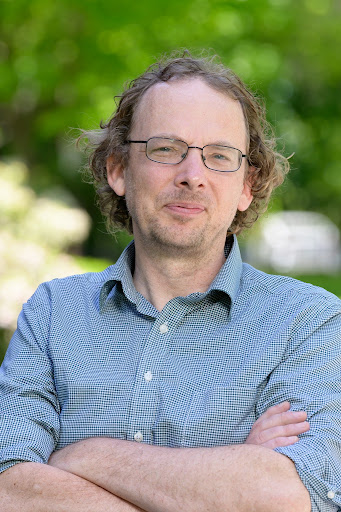
Professor Myers, director of the Center for Urban and Global Studies and the principal investigator on the grant, it was highlighted that origins of the project proposal can be traced to Trinity’s Urban Engaged Learning group, a collaborative network convened to strengthen coordination among campus centers. Therefore, when the Mellon Foundation’s call for community-engaged humanities research appeared, faculty across the Center for Hartford Engagement and Research and the Center for Caribbean Studies were already in conversation. They worked collectively to determine whether and how to apply. Since the grant required a humanities-based principal investigator, Professor Myers ultimately assumed the formal role, though he emphasized that much of the intellectual drive behind the proposal emerged from shared collaboration between Professor Williamson and Professor Guzmán.
Professor Williamson shared that parts of the project grew out of her work with the Center for Leadership and Justice and its division, the Greater Hartford Interfaith Action Alliance. For decades, the MIRA incinerator in Hartford’s South End burnt trash shipped from dozens of Connecticut municipalities; this concentrated environmental burdens in low-income communities of color in the South End of Hartford. Although the facility closed in 2022, debates remain over remediation and governance of the site. Professor Williamson described the incinerator as a clear case of disproportionate environmental harm, which is rooted in historical land-use decisions that placed the costs of regional waste management on Hartford residents.
Elaborating on the phases of the project, Professor Williamson noted that the partnership’s first phase centers on documenting lived experience. Through Trinity courses, students have conducted oral history interviews with residents affected by the incinerator and facilitated a PhotoVoice project, in which participants photograph their surroundings and collectively interpret the images. Fourteen oral histories have already been completed, alongside a first cohort of PhotoVoice contributors. The aim, as Professor Myers put it, is not to “make people guilty,” but to articulate the stories that exist and open space for conversation.
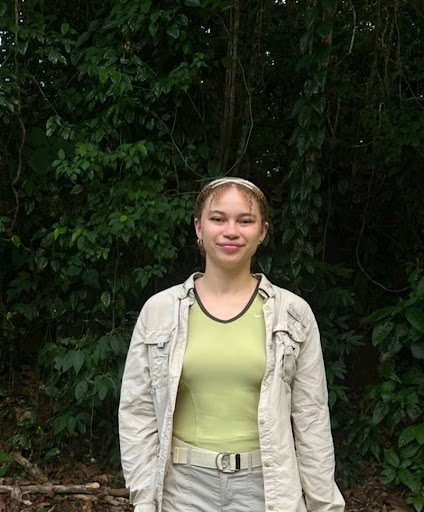
Professor Guzmán, who serves as project curator and is affiliated with the Harriet Beecher Stowe Center, recently renamed as Stowe Center for Literary Activism, approaches the work through a public history lens. Although her background is in museum anthropology rather than waste management, she was drawn to the project’s emphasis on storytelling and material culture. In her anthropology of museums course, students curate pop-up exhibition banners that translate oral histories, photographs, and archival research into accessible, public-facing formats. The banners debuted at the Connecticut Museum of Cultural History and are now traveling to venues including Urban Hope and the Avon Free Public Library, deliberately bridging urban and suburban audiences. The project also plans to showcase their exhibit at Trinity College at Mather Hall in April, 2026.
The exhibitions are paired with facilitated public dialogues, including sessions led by students in political science. “It’s only through dialogue that we can change people’s views,” Professor Myers reflected, reiterating that the project seeks to provoke regional conversation between communities that generated waste and those that bore its environmental impact. Future research will also address urban flooding and the topography of environmental risk in Hartford, as well as explore how faith communities conceptualize stewardship and environmental responsibility.
Ethical engagement is foundational to the initiative. Community partners are compensated as co-instructors, and participants in oral histories and PhotoVoice receive payment for their time. Students, faculty emphasized, are not positioned as detached experts but as collaborators. Professor Guzmán noted that this work requires ceding authority over the shaping of the project to community partners, which reflects commitment to mutual benefit.
For students, involvement offers more than research experience. It is an opportunity to practice community engaged scholarship, which is not only academically rigorous but also shaped by community priorities and designed for public impact. Whether facilitating interviews, curating exhibitions, conducting archival research, or leading dialogues, students participate in building a shared regional archive.
The project will culminate in a comprehensive exhibition at the Harriet Beecher Stowe Center in 2027, bringing together oral histories, photography, and historical materials into a sustained public installation. Over the course of the grant, the partnership will continue to expand courses, support faculty development, and circulate its findings through a dedicated website.

[…] Read the Trinity Tripod article here […]