Sajja Ranjit ‘29
Executive Features Editor
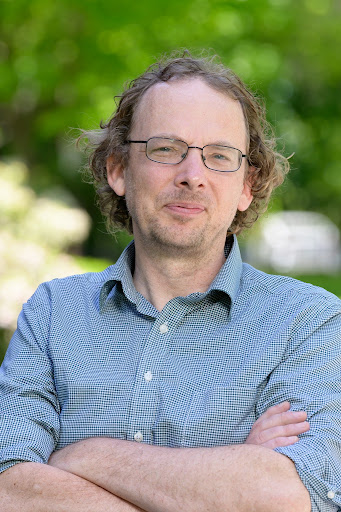
Associate Professor of Public Policy & Law Shane A. Gleason knows a thing or two about mentoring. His latest students, however, have four legs, whiskers and a tendency towards chaos.
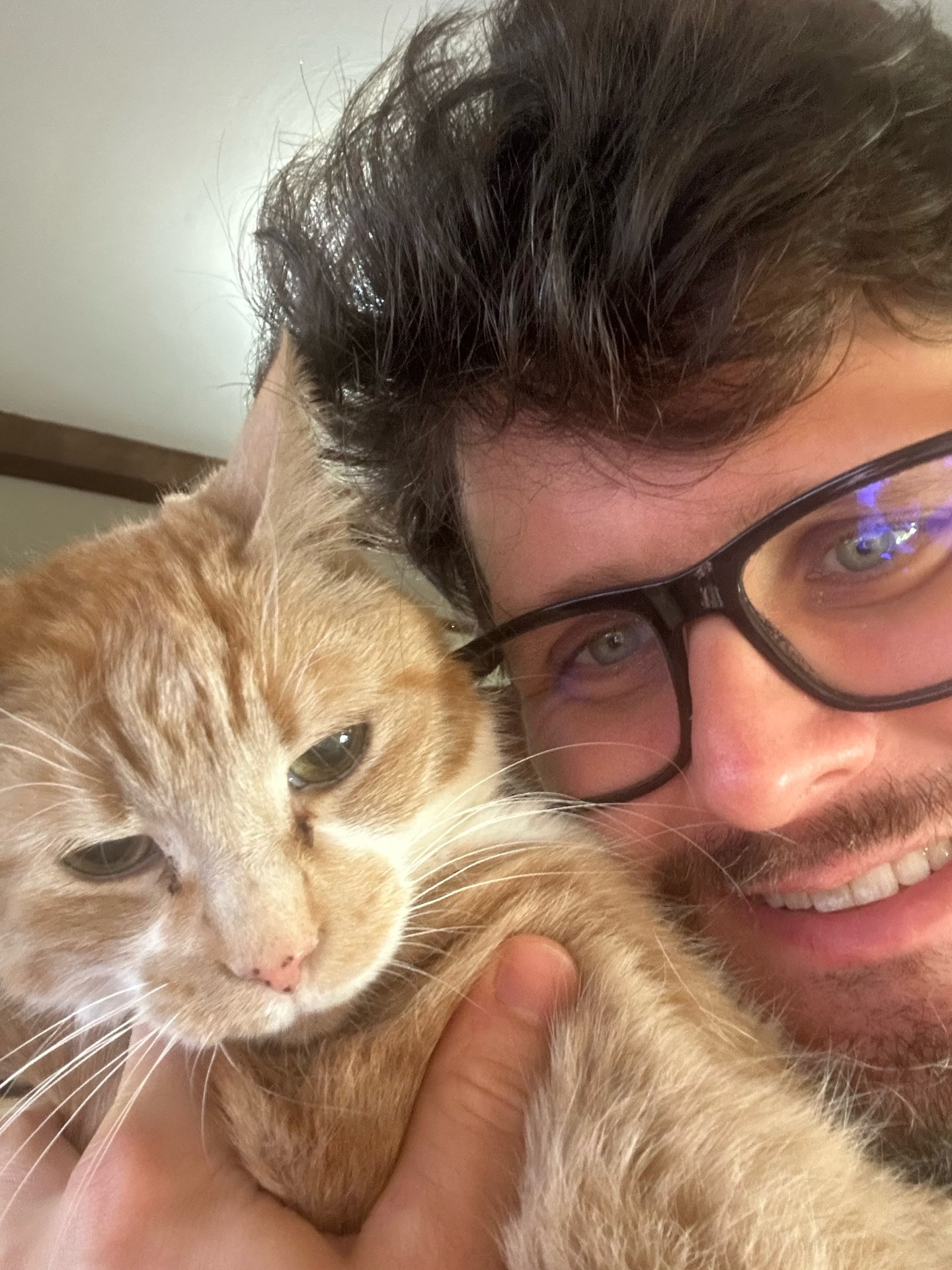
At Trinity, Gleason is known not only for his work as a public policy and law professor, but also for his involvement in the newfound Cat Club, where students have the opportunity to volunteer with animals and help cats in the Hartford community, some taking on the role of ‘cat cuddlers.’ It’s an unlikely pairing at first glance, but for Gleason, both reflect the same philosophy: create opportunities for others to grow, then let them take it from there.
Professor Gleason received the Law & Courts Section Mentoring Award from the American Political Science Association. The award, typically given to professors at PhD granting institutions, celebrates Gleason’s longstanding commitment to mentoring undergraduate and graduate students. The nomination, signed by a group of 36 professors, former professors, former students and mentees, highlighted several aspects of his mentorship including student research, career guidance, individualized mentorship and long term relationships.
For Gleason, the real mentorship lies in the seemingly mundane day to day moments. “A lot of the work that goes into mentoring is often unseen,” Gleason told the Tripod. “It’s the office hour meetings, it’s writing comments on a paper, it’s guiding someone through that law school or PhD application process”. That approach to mentorship is rooted in Gleason’s own experiences as a first generation college student. When he first arrived at college, he was unfamiliar with the many unspoken rules of academia: “On my first day of school, I didn’t know what to call my professors. I didn’t know if it was ‘doctor’ or ‘professor.’ I had no idea; nobody told me any of this and when I applied to grad school, I was flying blind.” Those experiences shaped what he sees now as one of the most important parts of mentorship: “Meeting the student where they are.”
During the interview, Gleason sat on one of the couches in his office rather than behind his desk, a choice that reflects the approach he takes with his students. “That’s part of the reason we sit on this side [on the couches] rather than me behind the desk because that feels too stiff and formal,” he said. That level of intentionality carries into Gleason’s individualized approach to mentorship. Rather than approaching mentorship as a one-size-fits-all process, he works with students according to their individual goals and concerns. Although this approach is time-intensive, Gleason finds the work rewarding.
“Especially with Ph.D. program mentoring, it’s incredibly intensive. I really only work with one person at a time because it takes so much time, but I make it a point to include students in the things that they would do in professional settings, like co-authoring articles,” Gleason said. “And working with students takes way more time than it would take for me to write the paper myself, but the process is very rewarding and it’s gratifying to see the cascade down into the next generation of professors.”
One example of that approach is Aidan González, whom Gleason met while teaching at Texas A&M-Corpus Christi. González took Gleason’s judicial politics and research methods courses, and the two began talking between classes. Gleason encouraged González to consider graduate school, but said he wanted to be candid about what an academic career actually looked like. “We had this talk about grad school, and I told him, ‘Here are all the things that are rough about academia. My nieces and nephews double in size practically every time we see them, and that’s really hard. But here are all the things I like about academia. Does that sound good to you?’” Gleason explained. “That conversation deters most people, but he decided to stick with it, and we started working on a project together.”
Gleason introduced González to members of his professional network. During the COVID-19 pandemic, González presented his research at a virtual conference. Afterwards, several colleagues had reached out to Gleason to tell them how impressed they were with González, who was a college senior at the time. “I remember sitting there watching him present and the little private chat box on Zoom and my text messages were blowing up with people on the panel saying “wait, this kid is a college senior? This kid is good.” Gleason said the experience reinforced what he hoped students would gain from being included in professional spaces: the confidence to see themselves as capable contributors.
González eventually attended graduate school and is now a professor at the University of Central Missouri. The relationship with Gleason has continued beyond graduation, with Gonzalez regularly calling to update Gleason on his career. “He calls me regularly and tells me what’s going on,” Gleason said. “And I’m just really proud of him.”
That impact came into focus for Gleason again at a New England Political Science Association conference in April. As he walked through the hotel listening to González and another student talk to each other, he realized that both students he had mentored were now in academia themselves. Gleason was quick to emphasize that the students had done the work themselves. His role, he said, was to help point them in the right direction. “I remember walking down the hallway and thinking, ‘Both of them are here. Both of them are in academia.’ It was just really humbling,” Gleason said. “And they’re the ones who did the work, but it’s really cool to be part of their journey and to help them get to that point.”
At Trinity, Gleason hopes students leave his mentorship with more than academic skills. He wants them to develop confidence, research and writing skills, and the ability to navigate their own careers. His advice to students is simple: “You don’t have to have it all figured out right now.” That philosophy extends beyond the classroom and into Cat Club, where Gleason intentionally gives students room to shape the organization themselves. He even stays out of the GroupMe, allowing students to decide how they want to build the club and support cats in the Hartford community.
Whether he is mentoring a student through graduate school or giving students the space to build a community around cats, Gleason’s approach remains the same: create opportunities, provide guidance and let students take it from there.