





Zeeva Haviland ’30
Contributing Writer
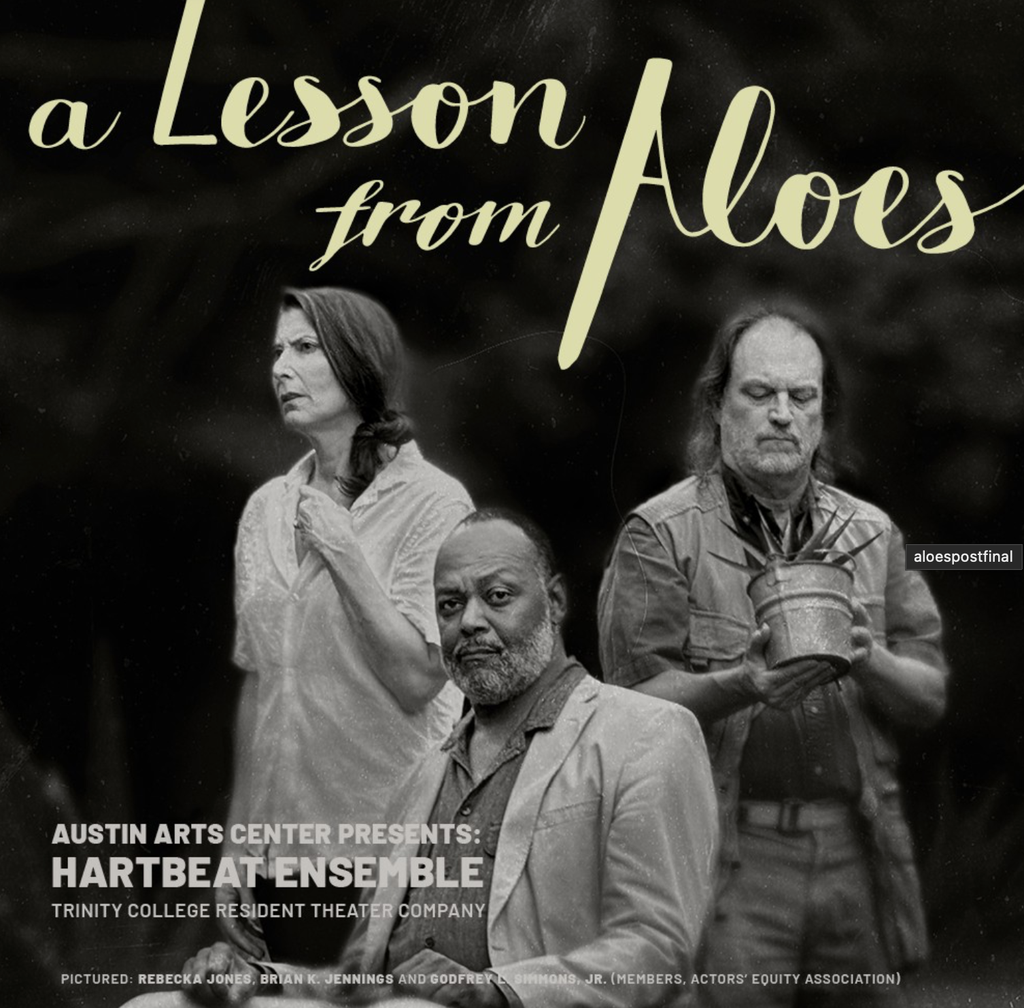
For the last nine months, the HartBeat Ensemble, a community theater based in Hartford, Connecticut, has called the Austin Arts Center on Trinity College’s campus home. Moving to Trinity’s campus in Jan. 2026, the 25-year-old company has made it its mission to make accessible art in the Hartford community and is “dedicated to creating provocative theater that connects our community beyond the traditional barriers of class, race, geography and gender.” From shows that address social justice issues to inclusive ticket pricing, the HartBeat ensemble strives to connect the community across traditional social barriers.
“A Lesson From Aloes” is one of these shows. Taking place in apartheid South Africa, the show illustrates the harsh reality of life in a police state, consisting of 3 characters: Piet Benzuidenhout, an Afrikaner; Gladys Benzuidenhout, Piet’s English wife; and Steve Daniels, Piet’s friend and a black activist who was just released from prison under a banishment order.
If you are looking for fast-paced entertainment, this show is not for you. However, if you are looking for a show that makes you think critically and addresses key issues of racism and policing, “A Lesson From Aloes” is for you.
While the first half of the show is extremely slow-paced and, frankly, a little dull, it does introduce the suffocating and paranoid atmosphere of apartheid South Africa. The seemingly endless time dedicated to talking about aloe plants highlights Piet’s struggle to find himself after being ostracized from his activist group due to suspicions of Piet being the police informant. Piet’s dedication to the aloes serves as his shield from needing to address his isolation and highlights his survival. The aloe plant is known for its ability to survive in extremely harsh conditions and parallels the rigid and oppressive system of apartheid South Africa.
Despite the first half of the show being very drawn out and full of awkward silences, Brian Jennings’s (Piet) and Rebecka Jones’s (Gladys) performances were excellent and truly heartfelt. While watching Gladys’s mental breakdown and her husband’s heartbreak at his inability to help his wife, I could truly see the terror and long-lasting consequences of living through a police raid.
Where the show truly picked up was in the second act when Godfrey L. Simmons Jr. (Steve) took the stage. As he entered the stage, Steve and Piet greeted each other; their joy and laughter were contagious across the audience. As Steve struggled to determine if Piet was indeed the informant that landed him in prison, the air on the stage quickly became uneasy. The tense discussions between lifelong friends highlighted the paranoia and distrust; these were caused between friends due to living in a police state with constant raids and oppressive racial classifications. The passion and fear that Simmons was able to convey through Steve illustrated the harsh reality that many parents faced due to the oppressive regime, where parents were forced to leave the only place they had ever known to protect their kids from state-sanctioned violence.
While not the most entertaining show, “A Lesson From Aloes” tackles critical issues relating to Apartheid South Africa and state repression and racial violence across the globe. Although taking place 60 years ago, many of the socio-political and psychological issues addressed in “A Lesson From Aloes” are still relevant today.