





Donald M. Bishop ’67
Alum Contributor
A milestone on the path toward racial equality in America was the full integration of Black Americans into the armed forces. It was President Harry Truman who ordered the end of racial segregation in the services in 1948, but there were early steps made during World War II. Eric Purdon ‘35 played an important role as the wartime commanding officer of one of two U.S. naval vessels with Black crews.
In the prewar Navy, Black Americans were only enlisted as cooks and mess attendants, but during the war the Navy Department eventually yielded to public pressure and opened more “ratings” (specialties) for Black sailors. To evaluate whether these Black sailors could capably crew a vessel that required many different technical ratings, it designated a destroyer escort, the USS Mason, and a submarine chaser, USS PC-1264, to be crewed by Black sailors. The ships were to be “guinea pigs” to prove or disprove the abilities of black crewmen.
The Navy placed oversight of the two vessels under a Bureau of Personnel officer “carefully selected for…sympathetic understanding of the Negro problem as much as…Naval experience.” White officers had to volunteer in order to be a part of this program. Despite the fact that he had spent less than ten days underway at sea, Purdon was offered the command of the submarine chaser USS PC-1264, 173 feet in length with a crew of 66, armed with depth charges, 20 mm, 40 mm and 3-inch guns, as well as “Mousetrap” anti-submarine rockets. “Happy and hesitant,” he accepted.
Purdon was born in the Philippines, his mother American and his father British. His secondary education was at St. Columba’s School in Dublin, Ireland. At Trinity, he was a varsity swimmer, Jester and member of the Glee Club and Choir. An English major, he was on the board of both the Ivy and the Tripod. He was also a member of Alpha Delta Phi.
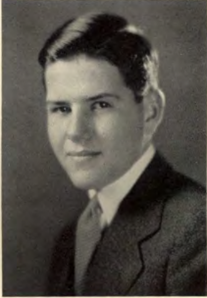
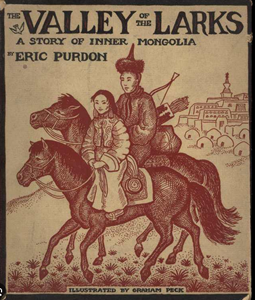
After graduation he worked in the Philippines, at a sugar plantation and coconut factory. In 1936, he traveled through Inner Mongolia, and the experience led him to write a well-received novel for young readers, “The Valley of the Larks,” in 1939. Returning to the U.S., he became an associate book editor at Farrar and Rinehart.
He had seen Japan’s aggression in China, and in 1939 the war began in Europe. Purdon joined the Navy in 1941. After commissioning, he was moved into anti-submarine warfare.
The number of Black naval officers at the time was zero, so his ship’s officers were white. Purdon had to choose them from among students currently in anti-submarine training who would, like he had, volunteer to serve on the ship. The ship’s eight white senior petty officers understood they would be trainers as much as supervisors, eventually to be replaced by Black members of the crew as they were qualified and promoted. Purdon immediately asked that his ship be assigned a Black officer.
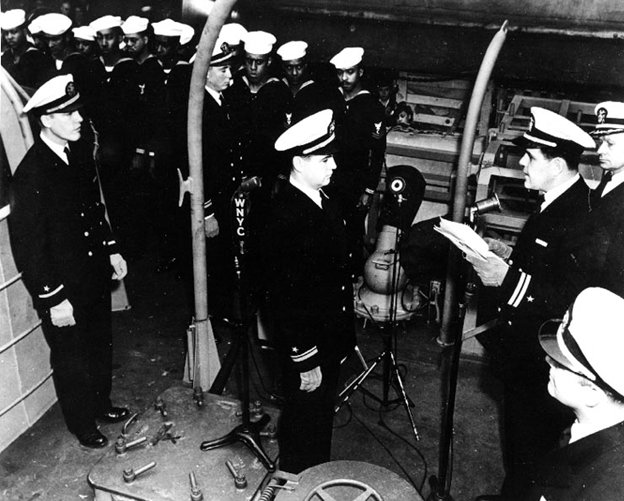
Commissioned in February 1944, the PC-1264 was assigned to the Navy’s Eastern Sea Frontier (the coastal waters from Canada to Florida). U-boats prowled the sea lanes off the American coast, so the command’s ships escorted convoys from the Caribbean and the American South to New York, where the lumbering merchant ships would join larger convoys to cross the Atlantic.
Purdon told the full story in his 1972 book, “Black Company.” He compactly summarized the policy changes that led to crewing the two ships with Black sailors. Then he described everyday life, preparing for sea, shakedown cruises and sea trials, shepherding convoys, vigilance for U-boats, attacks and depth charges, and the technical race between the U.S. Navy and the Kriegsmarine to deploy new technology and more capable vessels.
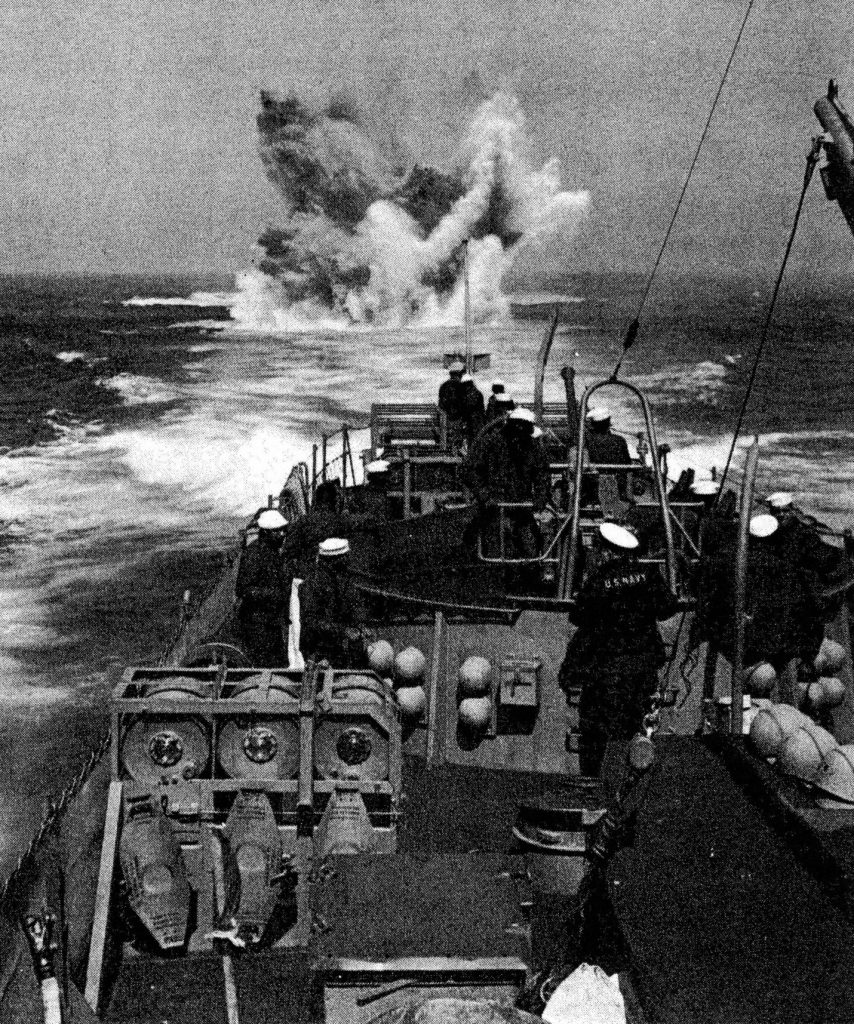
At sea, PC-1264 proved its worth, often graded “excellent.” Ashore, however, the crew confronted racial stereotypes, prejudices and conflicts – the further south (Miami, Key West) the more severe. But the book is mostly about a naval vessel at sea: weather, storms, ice in the north, heat in the south, engines, sonar, signals, navigation, crew coordination, chow, naval traditions like “rank has its privileges” and stories treasured by shipmates.
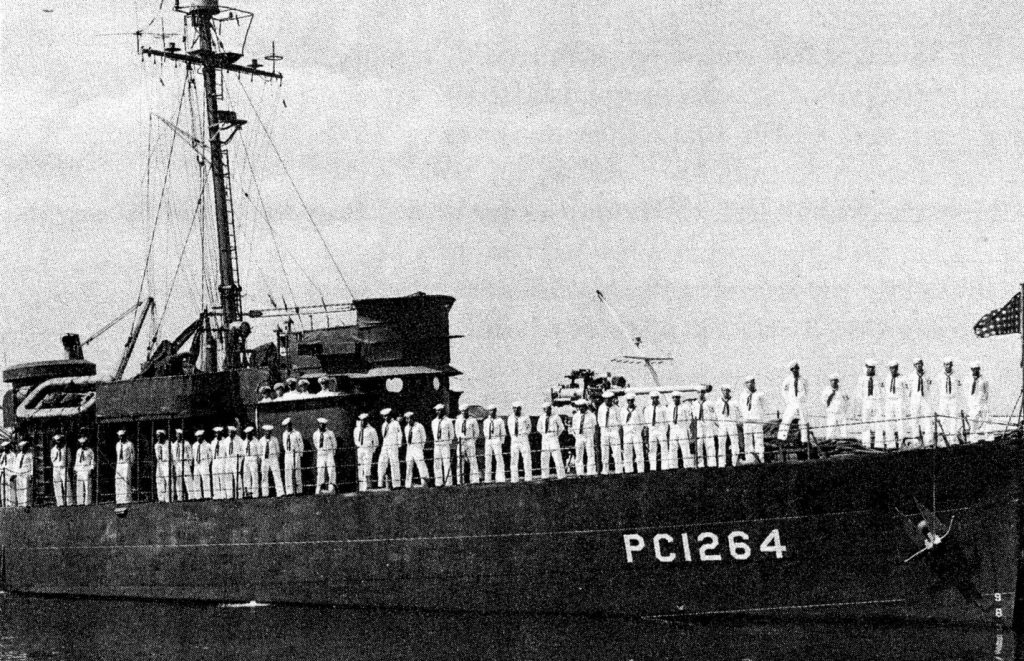
While Purdon related racial incidents and prejudices, he focused less on reluctant Navy Department policy and discrimination at shore establishments and more on good leadership, efficient performance in many different crew roles and a proud and happy ship. A 1944 issue of the Trinity College Alumni News quoted Purdon: “This is, as you will discover, the best ship in the United States Navy.”
The white petty officers were all reassigned by 1945, with Black members of the crew promoted into their billets.
The PC-1264 received orders to join the Pacific Fleet just before the war against Japan ended. Instead, it returned to New York and was decommissioned.
Purdon became a civilian intelligence analyst after the war, but he was recalled to active duty in 1948. His Cold War assignments included London, Frankfurt, Boston, Washington and Taiwan. After retiring in 1963, he continued as an information officer and spokesman for the Department of Commerce, the Office of Economic Opportunity and the Job Corps.
He saw the rise of the first Black officer on his PC-1264, Ensign Samuel L. Gravely, Jr., become the Navy’s first Black admiral in 1971.
The Trinity alumnus wrote, “No sailor aboard could feel less than a deep and proprietary pride that he was a member of this crew; that he had had a part in establishing his ship’s reputation; and so proving that human ability could no longer be judged by outward appearance. It was now up to society to recognize this now irrefutable fact.”





+ There are no comments
Add yours