





Evren Durham ’30
Contributing Writer
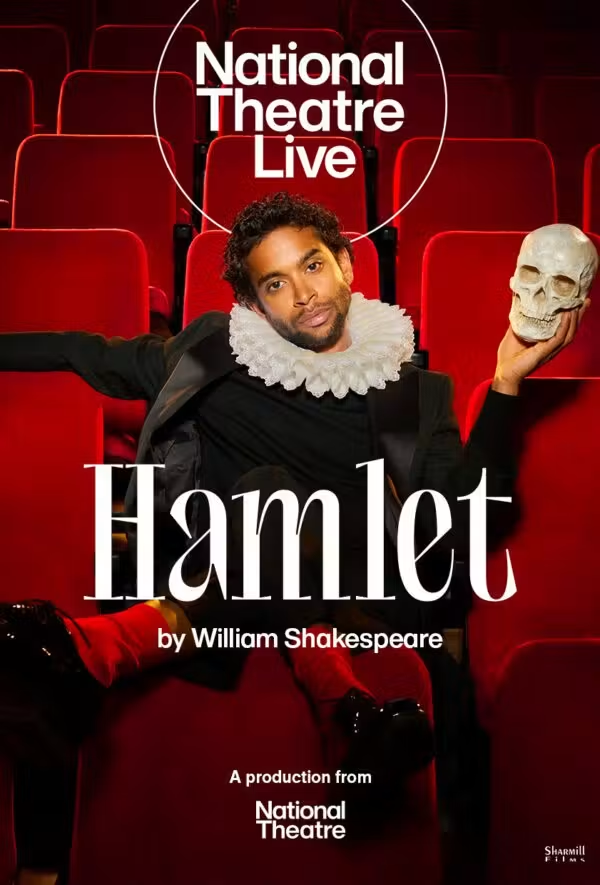
This past weekend the Cinestudio showed National Theatre Live’s version of “Hamlet” by William Shakespeare. It was a filmed version of one of their live performances at 2 hours and 57 minutes long (with a 15-minute intermission). Set in a more modern time, they still keep most of the original script and refrained from too many changes to phrasing (something the Shakespeare nerd in me quite enjoyed, especially because they did it well).
While overall I enjoyed this performance, I do not think I would want to see it again unless it were truly a live show. There were multiple aspects that did not translate well to the screen from the stage, which made the overall experience worse.
From a technical perspective, the sound effects and sound quality were very strong and did a great job of contributing to the overall mood. However, the lighting felt as if it were holding back understanding at some times. While I understand having darker scenes and moments that are obscured, I still feel as if I need to see most of the scene, which was not happening in certain sections. At times, the cameras would zoom into something, yet I could only see parts of it. On a similar note, the cuts between cameras often felt unnecessary and choppy to me. Though I know this is hard to avoid, I do think it could have been executed better.
As for the actors, I thought most of them did a wonderful job. They created very strong and distinct characters which truly helped to pull the audience in. However, Hiran Abeysekera, who played Hamlet, stood out especially to me as both the best and worst of the group. Overall, his performance was fantastic. His Hamlet was unique, fascinating, sassy, fun, and a joy to watch interacting with the other characters. His chemistry was palpable and intentional, and his reactions were beautifully done to whatever else was happening in the scene. But whenever he was alone, it felt off, and not in an intentional way. I think it may have read better in a theater, but in a film it felt as if he was overplaying most of his lines and trying too hard for reactions that don’t exist outside of the theater itself. This proved a harsh blow against the show as a whole, disconnecting me from the experience.
Outside of the translation from play to film, I also found issue with the costuming. I think the costuming for the men was beautiful, and it helped bring us into a more modern era while establishing character. For the women, though, it felt completely different. The outfits they were put in seemed like an afterthought compared to their male counterparts and often felt disjointed from everything else. For example, the shiny dress with silver detailing that Francesca Mills (Ophelia) is put in for her first scene felt like it did not match with the outfits of anyone else. Additionally, Tessa Wong (Horatio) is one of the few characters who changes back into an outfit she has previously worn for no given reason. Although the overcoat was changed, the vest, shirt, and pants are the same as the ones she had changed out of multiple scenes ago.
I feel like this review would be incomplete if I did not mention the genderbending of Horatio. While she is not the only genderbent character, she is the only prominent character to be genderbent, making it of notable importance. I still cannot say I concretely think this was a good or bad idea, but I do find it interesting. Objectively, the character is still played very much the same and has the same role. It filters through a feminist lens, as there is another female character thrown into the mix along Gertrude and Ophelia, proving an inbetween. Additionally, she also (spoiler warning) survives, so what does that say about the place of women in Shakespeare’s plays, and in the world itself? I do not think the choice to genderbend Horatio was purposeful, which I do think is a weakness, but I found it compelling nonetheless.
Overall, when asked whether or not to watch “Hamlet”, I would watch it. However, I would not rewatch it.