





Savannah Brooks ’26
Editor-in-Chief
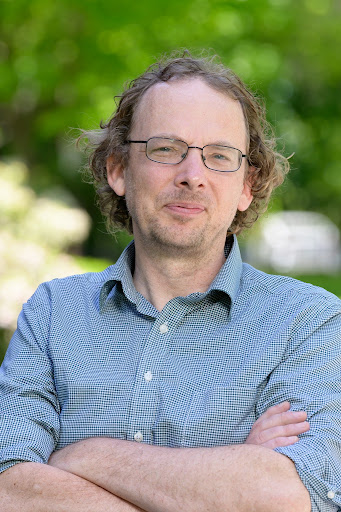
Paul E. Raether Distinguished Professor of American Studies Davarian Baldwin is no stranger to political turmoil surrounding higher education; in fact, he predicted the taxing of endowments and the removal of DEI programs in November of 2024. The shock in higher education surrounding the developments he has been “ringing the bell about for 10, maybe 15 years?” Baldwin says “It’s symbolic.”
“It’s a shocker if you took great effort to not see it,” Baldwin told the Tripod in an interview. “Once you go down a certain path and you’re selling a certain brand of higher education, you have to really believe it. You have to sell it and you’ve been told this is the only way to do it.”
Baldwin, who has been at Trinity since 2009, devotes a large part of his research to higher education, particularly in regards to how colleges and universities engage with the cities they inhabit. His Smart Cities Research Lab, founded in 2022, supports grassroots organizing campaigns around the world which aim to build better relationships between universities and their home cities, often by working with Payment in Lieu of Taxes (PILOT) programs which push colleges and universities to support their city financially, since most institutions of higher education are tax exempt due to their status as a public institution or a 501(c)(3). In this political moment, when those colleges and universities find themselves under political fire, Baldwin believes it is time, more than ever, to “try a different way.”
“We saw what happened with Columbia,” Baldwin said, referring to Columbia’s political battle with the Trump administration which saw the university pay a $221 million fine. “Columbia bent the knee. They still got attacked. UCLA is bending the knee, still getting attacked. How many times do you have to see this?” In order to escape attack, Baldwin argued, Trinity should stand apart, rather than staying quiet.
“I think it’s time to stand on courage in business. The thing that I believe is that if you create equitable conditions, people believe in that. People are struggling right now. Black, white, Asian, Latinx, they’re struggling right now. If you stand up and say, ‘We are going to create a higher education infrastructure ecosystem that invests in the American people,’ then when Trump comes, you would have the best kind of defense,” Baldwin said, referring to garnering community support. “You have an army of defense instead of an army of attack. We’re not Williams. We’re not Yale. This is a way to actually carve out a space of distinction for ourselves in the higher ed marketplace. This is a better way.”
When it comes to Trinity’s current messaging, Baldwin is skeptical. “Our new president is asking, ‘how can we turn Hartford into a college town?’ What does that mean? Does that mean having Lululemon and Anthropologie for students and just basically making downtown into a playground? We talk about training students for the 21st century. What does it mean, preparing students to coexist in dynamic urban environments they can’t fully control? Let this be a real laboratory of coexistence. The Crescent townhouses used to be a combination of students, office buildings and residents. They all coexisted. It’s been demonstrated that when you had the coexistence of students and residents in the same blocks, it provided better security and better safety.”
Baldwin has additionally been notified that Trinity has pulled their sponsorship of the Black Faculty Consortium of Connecticut, which Baldwin co-founded with Associate Professor of History and International Studies Seth Markle and Vice President for Diversity, Equity and Inclusion Anita Davis. However, he still believes that Trinity can move forward in a productive way.
“Trinity is actually well poised to be a leader in the higher education space as a liberal arts college in the capital city, if we can push away from trendy branding. I think we need to lean into this claim of, ‘let’s turn Hartford into a college town.’ Let’s redefine what that could mean. Equitable shared housing, living wages, common spaces, health care, mission-driven developments. Authentic transformation could be powerful.”


+ There are no comments
Add yours