





Clayton Palumbo ’29
Contributing Writer
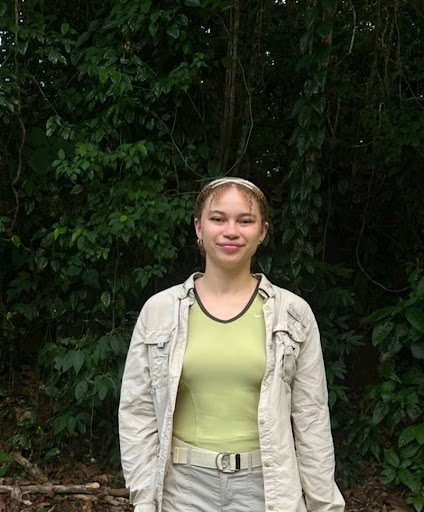
As a young student in a Quaker school in Philadelphia, Miranda Sklaroff was taught that all humans are equal, including students and teachers. Now, as she begins her first year as a political science professor at Trinity, Sklaroff has brought that philosophy with her, saying in an interview with the Tripod, “One of the reasons I love teaching so much is that I care deeply about what my students think. I’m really curious about why they think the things they do and what they think.” This approach to academia has guided Sklaroff from her time as an undergraduate student at the University of Chicago, to her time as a graduate student, teaching assistant, and Liberal Arts & Professional Studies Instructor at the University of Pennsylvania, to her new position here in Hartford.
Sklaroff spent the summer of 2025 getting to know the campus and was immediately struck by the sense of community. She says she was impressed with how open the campus felt and the close relationships shared between the administration, the faculty,and the students. She also fondly remembers meeting her new peers, specifically noting that she appreciated the fact that most professors who come to Trinity seem to stay at Trinity, stating, “It feels like a lot of people kind of come and land at Trinity and stay here for a long time, which means there’s so much institutional knowledge, and some of these relationships between faculty and staff are really deep.” Most recently teaching at the University of Pennsylvania — an institution with over 23,000 students — Sklaroff says she appreciates the tight-knit community, and has noticed that Trinity students “relate to one another” and “take each other seriously,” an observation she had not made in her previous positions.
When comparing the staff/student relations at Trinity with those at her previous school, she said “One thing that I really appreciate about Trinity is that it feels like the administration really cares about the safety of their students and about protecting their constitutional rights. I’m looking forward to being a part of a community where that’s true, and I really have felt that on campus, that it really feels like people care about each other.”
As a political science professor, Sklaroff does not mince words when discussing the significance of the subject in today’s modern world, stating, “I cannot think of a more important thing to be doing right now than studying the history of the United States government.” She said that the work is important and exciting, and that more than anything else, she loves to hear students’ perspectives on modern or historical ideas. She also mentioned that teaching in today’s divisive political climate does come without its own fair share of issues, sharing that ever since the pandemic she has noticed that students can be scared to voice their own perspectives and are much shier when it comes to topical discussions. This is why Sklaroff’s largest goal is to help students understand a better sense of their own politics, why they think the things they do, and how it connects to their own political practices.
As Sklaroff prepares to defend her own Ph.D. in political science at the end of September, she described the experience as a “pleasure and a privilege,” citing the coursework and the ability to “explore pressing questions” as some of her fondest memories. The experience was not without hardship though, as having to navigate the effects of the COVID-19 pandemic threw a wrench into the classes, as well as health problems within her family and the addition of her new child. She said that these tribulations helped inform her pedagogy by understanding that “even when students desperately want to be present in the classroom, sometimes they have whole worlds going on outside of academics too.”
Sklaroff’s dissertation is on “Anti-Eugenics: Theory and Practice in the Twentieth Century United States,” with eugenics being a topic that she has studied extensively throughout her academic career. In the spring of 2026, Sklaroff will be bringing that expertise to Trinity’s campus, as she will be teaching a seminar on eugenics in the United States. The course will focus on archival research, which she thinks “will be a great opportunity for Trinity students.” Sklaroff says that she believes that despite how “expansive it is as a notion,” there is a sort of “academic deficit” on the subject in America, which is one of the main reasons she is excited to bring the class to Trinity.
When asked about her vision for the future, Sklaroff said that she “can’t imagine doing anything else.” Though she describes academia as a hard profession to break into, as the jobs are often exceptionally competitive, she believes that it is “deeply satisfying to not only have the opportunity to work on your own research, but to hear constantly from students their own ideas.” As she continues teaching, she will remain dedicated to showing her students the same equality that she once received from her own teachers.

+ There are no comments
Add yours