





Lily Mellitz ’26
Executive Features Editor
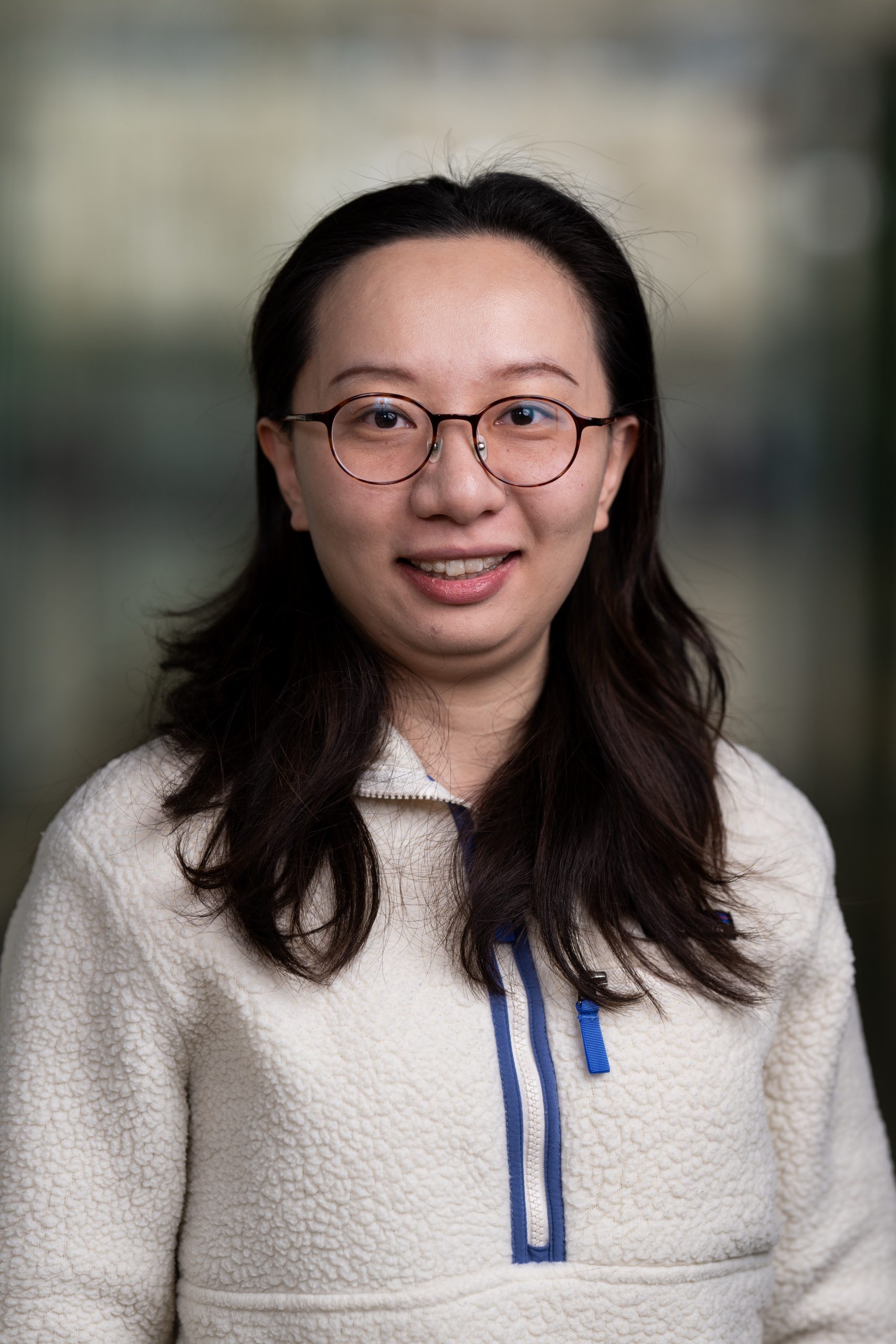
When Dr. Ruoxing Gao told the story of how she became an engineer, she did not start with a childhood dream of circuits or afternoons spent dismantling radios in her bedroom. Instead, she began with something quieter, almost accidental. “I came into engineering in a simple way,” she said. “[It was] more by elimination than by passion at first.”
Gao grew up in Henan, a central province in China known for its rich history and agriculture but not necessarily for turning out engineers. As a young student, she didn’t have a set plan for what she wanted to study. When it came time to choose a path in college, Gao moved to Shanghai and decided to try engineering—largely because other majors didn’t appeal to her. At the same time, she was preparing for China’s rigorous teacher qualification exams. She thought of the two tracks, engineering and teaching, as parallel but unrelated. Looking back now, she recognizes that they would eventually converge.
“In hindsight, that experience planted the seeds for combining research and teaching,” Gao reflected. “Though I’ve also explored both industry and academia along the way.”
This summer, Gao made her way to Hartford to join Trinity College as a tenure-track assistant professor of electrical engineering, fresh from earning her Ph.D. at the University of Michigan. For Gao, the move feels like both a return and a new beginning: a chance to step back into teaching after years of intensive research, while also helping to shape the future of Trinity’s growing engineering program.
She brings with her not only deep research experience but also a clear energy for the classroom. This fall, she’s teaching ENGR 301 – Signal Processing and Applications—a subject known for its technical density and intimidating reputation. Gao’s way of approaching it, though, is to cut through the abstraction and make it tangible, showing students how the theory connects to real-world examples they can see and use.
Gao’s research sits at the crossroads of theory and application. She studies electromagnetic theory, photonic crystals and antenna design, weaving together computational modeling and experimental work, and her doctoral work included contributions to NASA’s Soil Moisture Active Passive (SMAP) mission, which uses satellites to monitor soil moisture levels across the globe and track climate change patterns. She has also developed computational methods for magneto-optic materials—research that has implications for the development of next-generation communication systems.
At Trinity, Gao is eager to pull Trinity students directly into that process. Part of her vision for the years ahead involves creating projects that blend rigor with imagination—projects where students can test ideas in the lab and see how their work connects to larger questions in science and society. “I look forward to collaborating with colleagues and guiding students through projects that are both rigorous and engaging,” she said.
The path that brought Gao here has not been linear. After earning her undergraduate degree in Shanghai, she spent time considering careers in both industry and academia before committing to the long road of doctoral research. The years at Michigan, she said, were formative—not just intellectually but personally. She points to her mentors—Professors Leung Tsang, Mark Kushner and David Wentzloff—as models of both rigorous research and supportive teaching. “I’ve been fortunate to have outstanding mentors,” she said. “[They] shaped both my research and my teaching, and I aspire to carry that forward.”
Representation in STEM is often framed as a central issue, particularly in engineering where women and people of color remain underrepresented. When asked about this, Gao answered with careful honesty. “My honest answer is that I don’t think in those terms very much,” she said. “To me, all students are individuals first, and I encourage everyone equally to pursue their curiosity and growth.”
That doesn’t mean she is unaware of the challenges. Her perspective is rooted in mentorship, and her advice to Trinity students who may be hesitant about pursuing engineering is straightforward but powerful. “My advice to students, whether women, students of color or anyone considering engineering, is simple,” she said. “Be brave, stay curious and allow yourself to explore. “Even if you later choose another path, the experience itself will always teach you something valuable.
Courage and curiosity, she emphasizes, have carried her career forward, even during moments when her future felt uncertain. They are what sustained her through the long hours of doctoral research, the pivots between industry and academia and the leap of moving to Hartford to begin life as a professor.
Outside the lab, Gao is quick to admit that she is still very much a learner. Lately, she’s been experimenting with baking bread, though she confessed that it was “so far without success.” She’s also trying to improve her swimming but joked that she’s “already given up about 80 percent.” That humility, combined with a willingness to try anyway, carry her through both life and the classroom and is the same quality she wants her students to embrace.
“In many ways, my students are better than me in lots of things,” she said. “I remind them not to be afraid. If you want to try engineering, just give it a chance.”
As Trinity continues to expand its STEM offerings, Gao’s arrival signals more than just a new hire. She represents a new wave of faculty who are not only pushing the boundaries of their fields but also rethinking how to teach complex subjects to undergraduates. Her journey, from Henan to Shanghai to Ann Arbor and now Hartford, offers students not just an international perspective but a deeply personal one. She does not present engineering as destiny or inevitability. She frames it as an ongoing practice of discovery, persistence and openness.
Already, her presence is reshaping how students experience engineering at Trinity. In her classes, the emphasis is not just on problem sets and formulas, but on exploration and creativity. Whether her students go on to careers in labs, companies, classrooms or entirely different fields, she wants them to carry forward the courage to try and the curiosity to keep learning.
Correction: The first version of this article wrongly identified Leung Tsang and David Wentzloff.

+ There are no comments
Add yours