





Donald M. Bishop ’67
Alumni Contributor
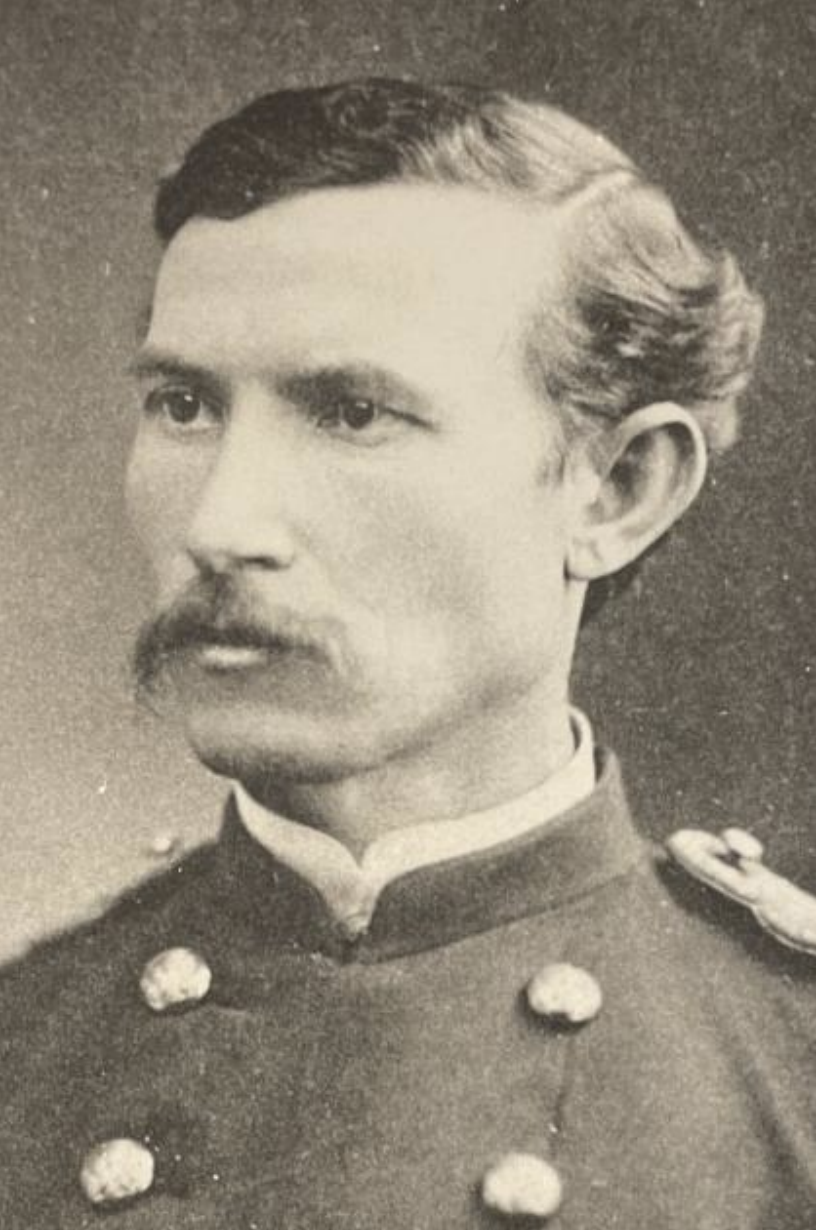
A graduate from the Class of 1858 deserves a place of special honor among Trinity College’s noted alumni. Henry Hubbard Pierce did not achieve high office, wealth, or fame, but he was a Civil War soldier and hero, an educator, a translator of Horace and Virgil, and an explorer of remote and mountainous northern Washington state. He died on a second expedition in the northern Cascades.
Pierce came to Trinity’s original campus from his home in Greenfield, Massachusetts. He was one of eighteen members of his class to receive a bachelor’s degree in 1858. He was recalled as “an erudite mathematician and excellent linguist.”
Just five weeks after the fall of Fort Sumter, Pierce enlisted in the 4th Connecticut Volunteer Infantry as a sergeant. The regiment deployed toPennsylvania and Maryland as Union volunteer units gathered to defend Washington. At the beginning of 1862, it was reorganized as the 1stConnecticut Heavy Artillery and joined the Army of the Potomac.
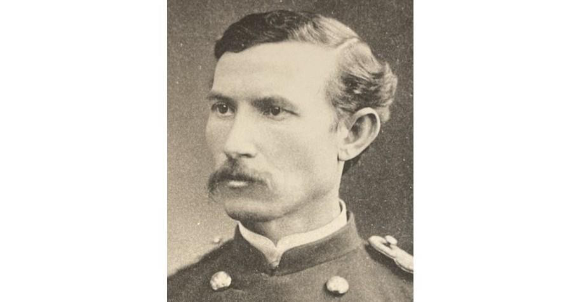
(Undated photo: Trinity College Archives)
Pierce served continuously for more than four years. He was twice given “brevet” promotions for gallantry. One recognized his action at the gruesome “Petersburg Mine Explosion” — also known as the “Battle of the Crater” — on July 30, 1864, firing his battery’s mortars to prevent more Confederate assaults.
And on January 22, 1865, he commanded Parrott guns at a water battery at Graveyard Bend, Virginia, downriver from Petersburg, then besieged by the Union Army. A flotilla of Confederate ironclad rams, gunboats and torpedo boats attempted to run down the James River to attack Grant’s headquarters and supply depot at City Point. In the two-day Battle of Trent’s Reach, Pierce and his artillerymen at Fort Brady damaged the CSS Virginia II and sank a gunboat, exploding its magazine and the southern attempt failed. Pierce was wounded.
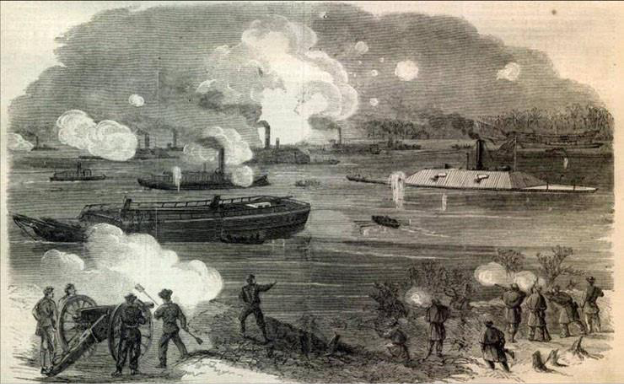
Pierce was breveted for “conspicuous gallantry.”
(Harper’s Illustrated, 2/11/1865, sketch by Alfred R. Waud. Public Domain)
He was again breveted, this time for “conspicuous gallantry,” one of only ten such brevets awarded during the war. By the end of the war, however, he was fighting malaria with large doses of quinine, with long term effects on his health.
Discharged, he returned to New England, read law and became a member of the bar. But in 1867, he rejoined the colors, becoming an infantry second lieutenant in the regular Army.
He was sent to Louisiana, then under federal occupation. Major General O. O. Howard, implementing Reconstruction, chose Lieutenant Pierce to be Louisiana’s superintendent of education. Much of the duty was supporting the new Freedmen Schools for those formerly enslaved. Over time, the number of these schools contracted due to inadequate funding, local hostility and the policies of President Andrew Johnson. Still, “the duties of this office he administered with integrity and intelligence.”
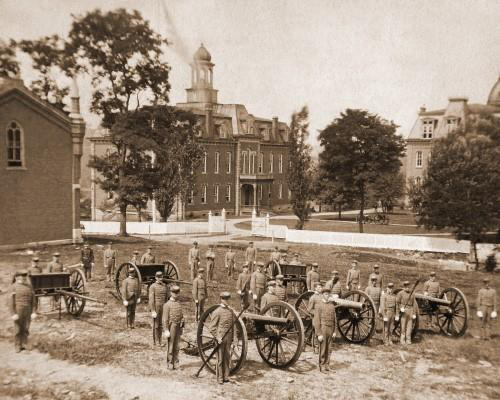
The Morrill Act of 1862, which established the nation’s land grant universities, required those schools to teach military tactics. In 1869, Lieutenant Pierce was assigned to the new West Virginia University as Professor of Military Tactics. He was also a professor of mathematics. He spent five years on the faculty.
Promoted to First Lieutenant, he was assigned to the 21st Infantry Regiment at Fort Vancouver, Washington Territory, on the north bank of the Columbia River a hundred miles upstream from the Pacific Ocean.
Many, but not all, of the regiment’s companies joined General O.O. Howard’s 1877 campaign against the Nez Perce until Chief Joseph surrendered. The regiment’s colonel noted that Pierce commanded a company during the war, but whether Pierce’s unit joined the march through Idaho and Montana and the engagements invites more research.
Another educational assignment followed — at Michigan Military Academy in Orchard Lake. He then rejoined his regiment at Vancouver Barracks as its adjutant. That humdrum, remote duty — and the encouragement of his commander, General Henry A. Morrow — allowed him time to pursue his interest in the classics. His “A Rhythmic-Prose Translation of Virgil’s Aeneid” and “The Odes of Horace: Complete in English Rhyme and Blank Verse,” published by Lippincott in Philadelphia, may have added a few dollars of royalties to his modest Army pay.
In 1882 he was again assigned as a Professor of Military Science and Tactics, this time at Pacific University in Forest Grove, Oregon, but his time there was cut short — he may have taught only a few classes — due to illness in the family. He returned to the regiment.
Soon afterwards, General Nelson Miles chose Pierce to lead an expedition to explore and map areas of the northern Cascade Range in the Washington Territory close to Canada.
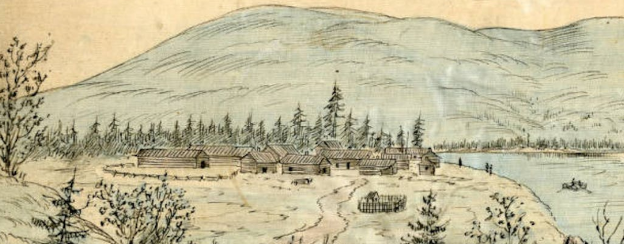
Pierce left Fort Colville, Washington, with cartographer and sketch artist Alfred Downing, a doctor, three soldiers, a guide and more than two dozen mules and cayuses. For the month of August 1882, they followed trails and rivers, climbed and descended sharp mountains, penetrated dense undergrowth, canoed through rapids, lost pack animals on steep cliffsides, endured storms of sleet, ducked falling boulders and survived falls into rushing creeks and rivers on their march west to Mount Vernon, Washington, above Puget Sound — 295 miles.
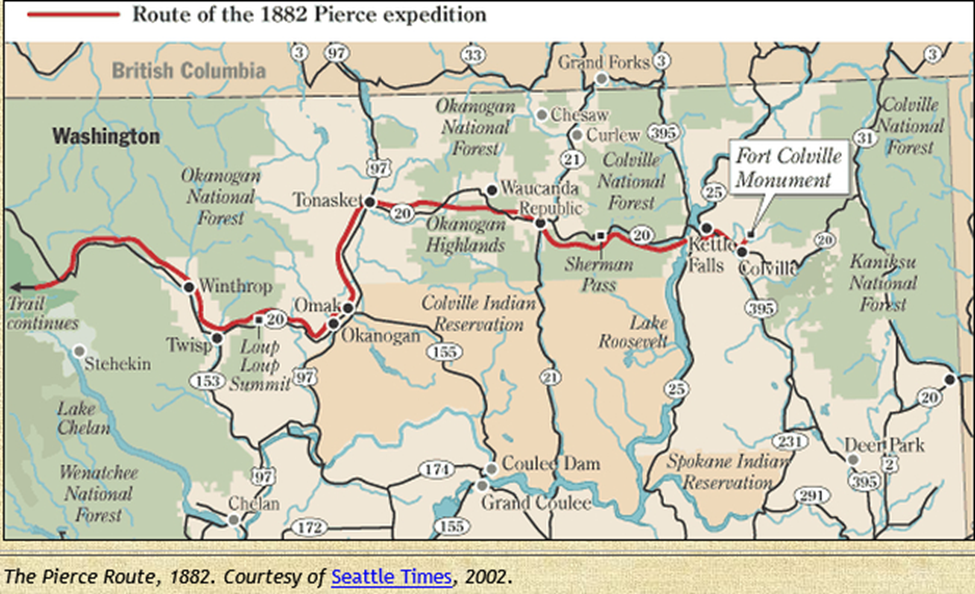
Pierce’s report of the expedition “by way of Lake Chelan and the Skagit River,” combining geographic description and adventure, is a good read. He noted “mosquitoes that infested the camp in swarms,” “the whir of the rattlesnake,” “the lusty salmon [as they] make their persistent and stupendous leaps to gain the upper stream over one of the foaming cataracts,” “gigantic cedars” and “thousands of ducks and wild geese.” He continued: “The creeks, shaded by willow, beech, birch, and poplar trees, with clumps of wild raspberry and currant bushes, are filled with trout, while the neighboring hillsides abound in deer and other game.” These wonders were punctuated by hardship and danger. Lack of grass on long stretches weakened the horses. At a difficult moment, the explorers had “a scanty meal of bread and snow water.”
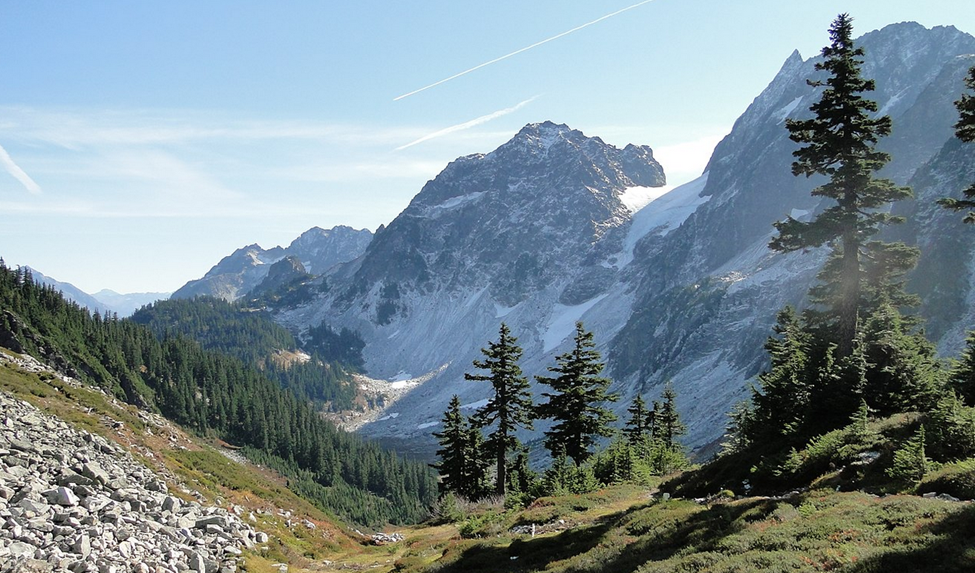
(Photo by Dave Waddell, cropped, Wikimedia Commons, CC-BY-2.0)
Despite some then-contemporary word choices, Pierce reported that the Native Americans, many ranching and growing crops, were “friendly,” “sober,” “honest,” “industrious,” and “reliable.” He had harsh words, however, for a “besotted, self-appointed chief” and one of the government’s Indian agents, “comfortably housed at a distance, [who] has left the nation’s wards to take care of themselves.”
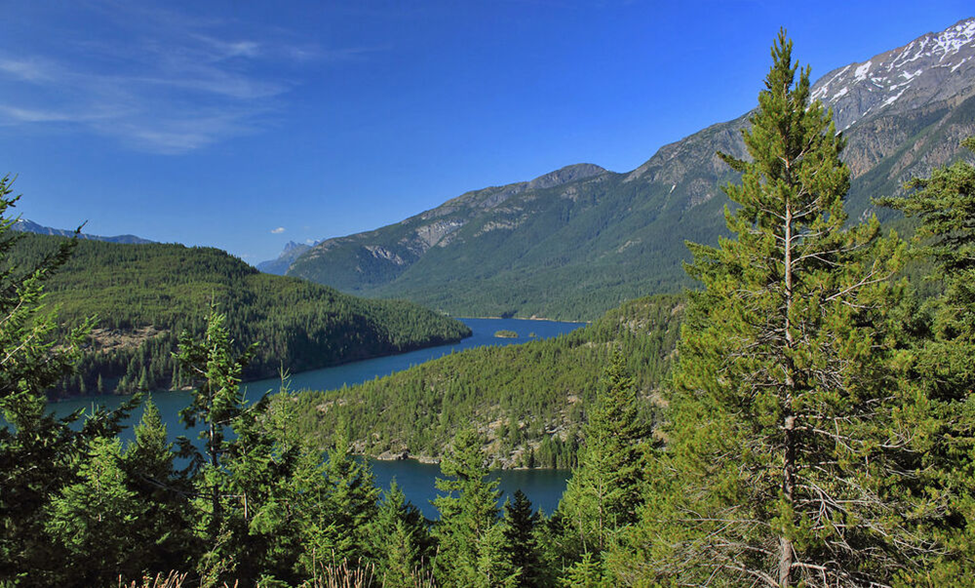
Pierce judged that the route “could in no wise be recommended, nor is there, in my judgment, likely to arise any military necessity for its use . . .”
When the report reached the Secretary of War, however, General William T. Sherman noted “it is to the national interest that the timber and minerals of that region should be brought within the reach of the emigrants who will throng to Oregon and Washington Territory as soon as the Northern Pacific Railroad is completed.”
General Miles was eager to learn even more about the Cascades, and in 1883 Pierce “was under orders to conduct a second scientific expedition through the mountains which lie between the Columbia River and British America.” Although he was by then suffering from tuberculosis, he was at Foster Creek in Douglas County, Washington, when he died on July 17, 1883.
Pierce combined an active military life with scholarship. He showed his courage in the great struggle to end slavery; played a role in Reconstruction even as the attempt was failing; and accepted hard duty in the Pacific northwest, seeing more of its mountains and rivers than the ocean.
A widow for nearly four decades, Margaret Pierce raised their four children on a modest pension. She and her husband now rest together in Oak Hill Cemetery in Washington, DC.


+ There are no comments
Add yours