





R. Jack “I Spent $65 on This Application” Ted ’84
(Nearly) Alumni Contributor
In the fall of 2024, Trinity received over 7,460 applications, of which 2,182 were offered admission. Ultimately, the college enrolled a total of 506 future private equity analysts and Starbucks baristas, culminating in a meager 29% acceptance rate. Dean of Admissions and Financial Aid Matthew Hyde touted the “compelling blend of experiences and perspectives” presented by the incoming class, despite knowing fully well that most of them will skip half of their ECON-101 classes and promptly complain about not receiving a grade higher than a C-.
Still, these highly optimistic outlooks on our freshman class’s prospects ignore a crucial fact: what about the 5,000-some applicants who didn’t make it into Trinity? It is not a good sensation to be rejected from a place that charged you $65 for a fully-digital application. Thus, I have a simple solution: stop rejecting people from Trinity.
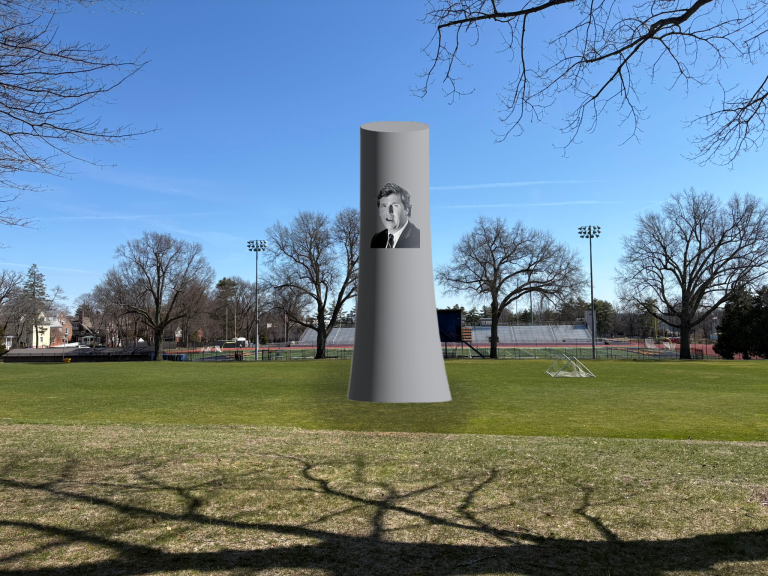
The math is straightforward: reject makes brain feel bad, so no reject means no bad feeling. In fact, think of all the positives we’d receive from accepting more people! 59% of the Class of 2029 applied for financial aid, costing millions of the college’s dear funds that could’ve been spent on an extension to Tucker Carlson’s PENIS. If we accepted more people, we would have to give out less financial aid, so the percentage of students receiving financial aid would plummet — and everybody knows that smaller percentages are always better for a college!
Additionally, Trinity is already the de-facto safety school for prep school Ivy League rejects. If we accepted everybody, we’d be the de-facto safety for all schools. Think of the gains in equity! On our webpage, we advertise the 87 countries and 46 states represented in the student body. Considering we receive more than half of our applications internationally, we could probably push the latter number over 100. On the subject of big numbers, our student-faculty ratio is 9:1. That’s no good — the number is too small! Accepting an incoming class of 7000 students could probably push that number well into the double digits.
Meanwhile, students on campus have noted that despite the horrific condition of upperclassmen dorms, North Campus touts rather large singles that have a lot of room. It’s no good that there is a discrepancy there — but again, we have a solution. If some of our housing options are a bit better than promised by the college, making those options bad enough that they match students’ expectations would resolve the dissonance. With 5,000 more admitted students, we could fit a dozen people into a North single. We could probably fit the same number into a Funston double. Hell, we could turn all of our quads into decuples, and all of the single rooms in a suite into quads. We value economic thinking at Trinity, and condensing our housing options truly adheres to this philosophy.
During course registrations, students often complain that the popular classes fill too quickly, so they only get into one or two of their top options. This is a disgrace — at Trinity, they should get into none of their desired options! A quintupled class size would elevate the hunger games of class registration, forcing all incoming freshmen to become “bold, independent thinkers” capable of bribing professors with class attendance to get a seat in the first prerequisite for their major.
One of our college’s main hallmarks is being the “preeminent liberal arts college in an urban setting.” But do you know what truly characterizes an urban setting in the 21st century? Sprawl, lack of space and cramming three people into a one-bedroom apartment with the rent doubled. At the moment, we only have a little of all of them. Thankfully, though, with more acceptances and more enrollment, we could finally reach our dreams of pretending that we are located in NYC. With thousands of people per class, fitting three dozen people in a Clement would be no issue, nor would the horrid green space still present on our “urban” campus. When all the dorms fill by the end of first-year dorm selection, we could build another dozen across our three quads, achieving the true urban sprawl that defines the modern American city. Abolishing rejection from our college would both address our plummeting acceptance rate and resolve our administration’s curious need for money despite raising over $400 million in the past three years. Ultimately, there is no reason that we should deny thousands of hopeful Bantams the opportunity to live the true Trinity dream: getting filled out of all of your required classes, living in a dorm with pipe bursts every December and watching tuition approach the six-figure mark as a new multi-million dollar building is built between three residence halls.

+ There are no comments
Add yours