





Sajja Ranjit ’29
News Editor
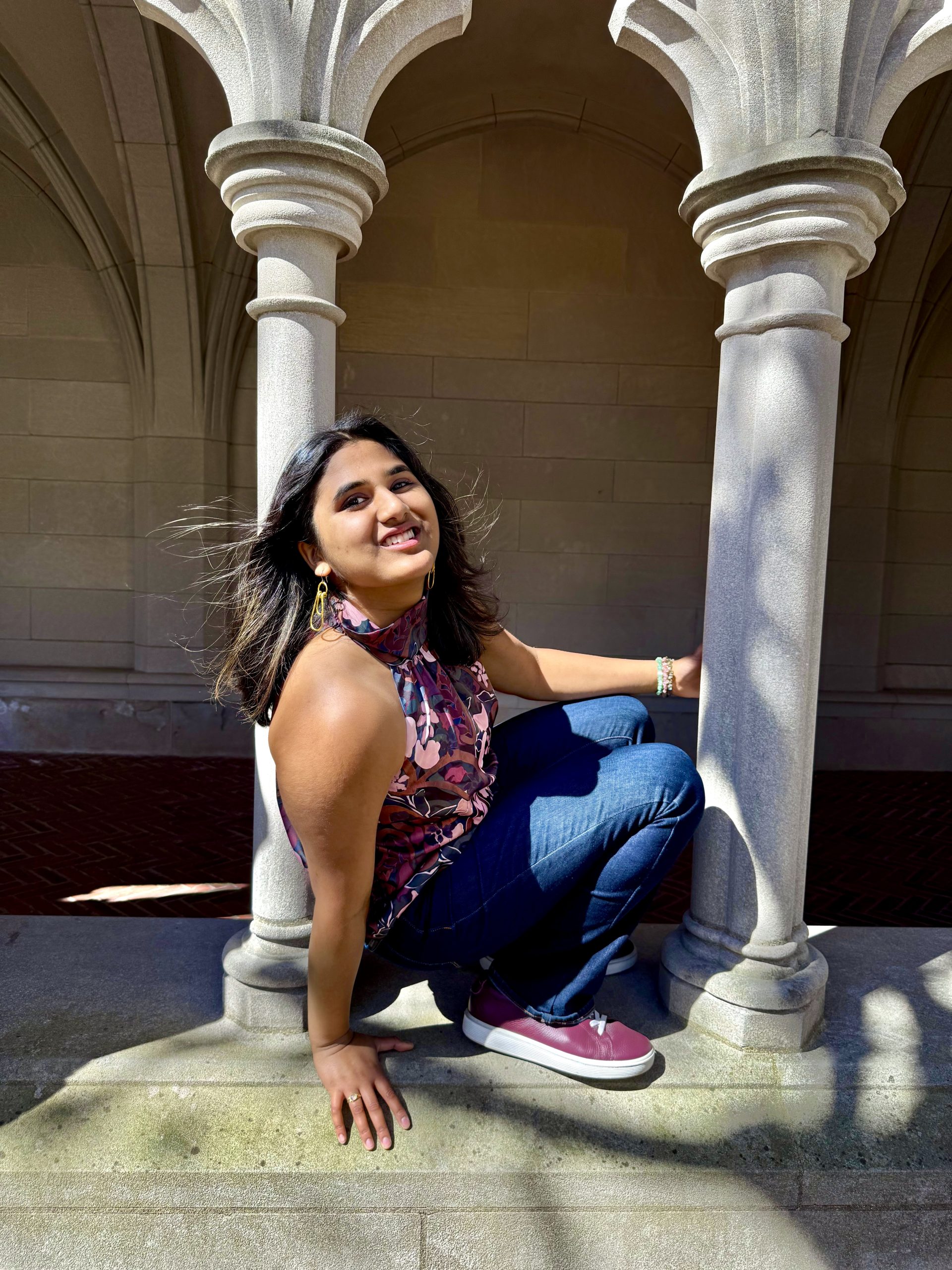
On any given day at Trinity, Jia Kumar ’26 can be found in the weight room, in the classroom, or at the center of campus conversation. But behind her ‘campus celebrity’ status is a student who has spent three years building communities, challenging norms and redefining what leadership can look like.
Before even stepping on Trinity’s campus, Kumar was already building things. Originally from Natick, Massachusetts, she took on leadership roles early on, including reviving her high school’s Future Business Leaders of America chapter and producing her own music. “I had to bring a lot of enthusiasm and energy to start [FBLA] back up,” Kumar said. “That was something I was really interested in.” Now an economics major with a double minor in urban studies and applied mathematics, Kumar has spent her three years at Trinity doing exactly that: building, leading and reshaping spaces around her.
Kumar said she was initially drawn to Trinity for its balance between city life and a cohesive campus environment. “I always knew I wanted to go to school in a city,” she said. “But I liked how Trinity still had a centralized campus and green space.” That sense of community became clear early on. During an admitted student’s visit, a professor interrupted his own class to help Kumar find her way after she got lost. “Lots of people just look out for each other here,” she said.
Since arriving, Kumar has taken full advantage of the environment, both socially and academically. While she entered Trinity knowing she wanted to study economics, her academic path expanded through her strengths in math and her experience in a first-year gateway program called “The Cities Program”, which ultimately led her to pursue urban studies. One class in particular, Race and Urban Space with Professor of American Studies Davarian L. Baldwin left a lasting impact. “It really taught me how to look at spatial design differently,” she said. For her final project, Kumar analyzed her hometown, examining how neighborhood design can reinforce inequality. “It made me reevaluate things I thought I knew about a place I’ve lived since I was 10,” she said.
Outside of the classroom, Kumar’s most meaningful contribution to Trinity has been founding the Trinity Women’s Lifting Club, a space designed to make strength training more accessible for women. “I just don’t see a lot of women in that field,” she said. “There’s a lot of fear and misinformation like not wanting to get ‘bulky’, that discourages women from lifting.” She recruited an executive board over the summer, built an online presence, and began outreach early. “It’s been really great,” she said. “I’ve made a lot of really good friends through it, and the environment is super welcoming.” Even beyond the club, Kumar recalled a staff member noting an increase in women using the weight room, something she sees as part of a broader change. “Even just knowing there’s a women’s lifting club makes the space feel more approachable,” she said.
Beyond the physical space of the gym, Kumar’s impact on campus is also tied to her visibility. Having been in the public eye since early in her freshman year, when she ran for and won class president, she has learned to navigate both the positives and challenges that come with being widely recognized on a small campus. “I’ve kind of been in the public eye since the first couple weeks of school,” Kumar said. “There are always going to be people who have opinions about you, especially when they don’t actually know you.” Kumar acknowledged that anonymous platforms like Yik Yak have played a role in shaping her “campus celebrity” status, sometimes amplifying both praise and criticism. “You just have to accept that some things are out of your control,” she said. “People are always going to talk, but it doesn’t really matter in the long scheme of things.”
Over time, Kumar said she has developed a thicker skin and a stronger sense of self. Rather than letting negative comments define her, she focuses on the connections and opportunities that visibility can bring. “I think it’s also helped me meet a lot of people,” she said. “It’s easier to make connections because people already feel like they know who you are.”
Still, she emphasized the importance of staying grounded. “I always try to treat people with respect,” Kumar said. “Because I know they’ll remember that interaction longer than I will.” Kumar’s ability to balance visibility with authenticity has shaped a lot of her college experience, both on and off campus. This balance was especially tested during her time studying abroad during the spring semester of her second year in Cambridge, England. “I had a really hard time at the beginning,” she said. “I was the only Trinity student in my program, and it felt like everyone else already knew each other.” Despite the initial challenges, Kumar said the experience pushed her out of her comfort zone and helped her grow. She formed new friendships and found unexpected enjoyment in exploring smaller towns. “I thought I’d like the big cities the most, but I actually ended up loving the smaller places.” Kumar said.
Kumar will graduate after just three years at Trinity, an accelerated path that reflects her academic focus and drive. Following graduation, Kumar plans to attend graduate school, though she is keeping details private for now. While she said she will miss the community she built at Trinity, she feels ready for what comes next. “I’ll definitely miss my friends, but I feel like there’s more ahead, and I’m excited for that.”
Reflecting on her time at Trinity, Kumar emphasized the importance of taking initiative, especially when it comes to building relationships. “For my freshman self, I would say don’t be afraid to look like the person who cares more. Making connections isn’t embarrassing.” For incoming students, she emphasized that growth comes not only from finding people similar to you, but also from engaging with those who are different. “You’re going to find your people, but you should also find people who aren’t like you, because that’s how you grow.”





+ There are no comments
Add yours