






Nick Cimillo ’26
Managing Editor
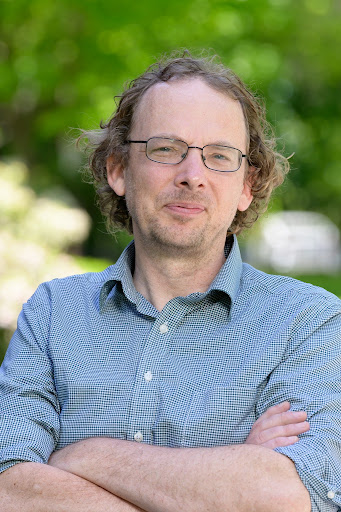
If there is one establishing fact that Daniel Lugo, Trinity College’s newly instated 23rd president, wants you to know about himself, it is that he is a staunch proponent of liberal arts education. His background certainly says as much: having completed his undergraduate studies at Carleton College, where he later served as assistant dean of admissions, his career in higher education spans liberal arts institutions such as Franklin and Marshall College and Colby College. Officially starting his newest position as of July 1 and succeeding President Joanne Berger-Sweeney, Lugo came to Trinity following his role as the president of Queens University of Charlotte. And yet, with how central higher education has been to Lugo for over 20 years, his career was at first oriented towards the legal field.
“I have been working in higher education for the last 21 years,” Lugo said in an interview with the Tripod, “and it was actually an industry and career change in my life because I was originally an intellectual property attorney.” After studying political science at Carleton College, Lugo received his J.D. from the University of Minnesota Law School before he started his work as an attorney in New York City. “I would say I enjoyed it for my first four years,” he said, “ and spent the next four thinking: ‘What do I really want to do with my life?’ And I made the decision that the most important thing in my life, and that had the biggest influence on my life, was my collegiate experience at my alma mater.” As a first-generation college graduate, Lugo believes that attending college had a profound impact on him. “And so we made the leap of faith as a family—my wife (TinaMarie Lugo), my daughter (Amanda Lugo) and my son (Michael Lugo)—to move to Northfield, Minnesota to rejoin my alma mater and to work in development and admissions. And instantly, I knew I was in the right industry.”
When searching for the next step in his career after his time at Queens University of Charlotte, a few things appealed to Lugo about Trinity College. “I’ve always known Trinity for its academic excellence,” he said. “I’ve also known lots of Trinity alumni that have just been so successful in their careers in a whole wide range of fields.” Location was also a factor: having grown up in Long Island and worked in New York City as an attorney, Lugo expressed familiarity with the northeast. “This is a bit of a homecoming,” he said, “a return to a part of the country that my wife and I are most familiar with. We’re both from the New York area, and so we have family and friends deeply embedded in this area. So it just felt like a good fit.” And not only does Lugo find the area familiar, but advantageous: “I think that Trinity has one of the best locations that you could imagine for a college,” he continued. “We’re in a capital city with great culture with great businesses. And we’re a train [or] short car ride away from New York and Boston; that’s just a huge huge advantage I was attracted to.”
In recounting what he believes sets Trinity apart from other institutions he’s worked for, Lugo brought up how he believes its students have the ability to balance several interests, whether they be academic or more personal. “Our students have a turnkey way to balance all of their passion and all of their interests,” he said, “and to get that done in a healthy and rigorous way. [That] isn’t true everywhere. A lot of places [put] more pressure on students to kind of pick and choose, and I’m glad that’s not the case here at Trinity.” He also stressed the importance of location once again: “When you think of Carleton in Northfield, Minnesota, which is a city whose nickname is ‘The town of cows, colleges and contentment’, that’s not Hartford. And if you think of Colby, which is in Waterville, Maine, which is three hours away from Boston, that’s not Hartford and this capital region. The advantages that Trinity has from a curricular and co-curricular perspective are second to none. The way our faculty can curate experiences in the surrounding areas, the way our students can get internships in the surrounding areas…that can’t happen in Northfield, Waterville [or] in Lancaster, Pennsylvania at Franklin and Marshall.”
For all his appreciation of a liberal arts education, Lugo does believe that the realm of higher education is riddled with disruption. However, now at the beginning of his first academic year as Trinity’s president, Lugo believes that disruptions in higher education have paved the way for beneficial changes and opportunities. “Where there used to be this incredible partnership between the federal government and American higher education…there’s now a fissure: in [the form of] slashing those budgets, in slashing access to aid for people to get jobs. So the disruptions just keep growing. Now, some people say, ‘Well, why do you wanna work in that area?’ I actually think that those disruptions have forced higher education to do something that it didn’t have to do in the previous 40 years, which is to compete. And in order to compete, you have to get better.”
Lugo emphasized that colleges like Trinity have already undergone changes to be more competitive: “In the 1980s,” he said, “there was a sense, especially at liberal arts colleges, [that if] you don’t know what you’re going to do with your education, you’ll figure it out on your own. That’s what professors and administrators told me when I went to college in the 80s. [But colleges] actually have to provide support; you actually help students try things on and get internships and support them in getting into their next step.” The ever-growing gap in what Americans make and the costs of running institutions, the rise of technology and A.I. altering how students learn, and media backlash questioning if a college degree is even worth it are some disruptions in higher education that Lugo identified, but he remains optimistic that “all of these things are [going to] make us better. That’s what disruption does: it makes us better. And I think that Trinity is poised to really compete, to thrive and to grow.”


+ There are no comments
Add yours