





Donald M. Bishop, ‘67
Alumni Contributor
Two cryptic sentences in the March 1944 Trinity College Alumni News read, “Jack Follansbee, USN, attended the New York Alumni dinner in December. He was not very communicative about his activities, though we did learn that he has twice found himself rowing about the ocean.” Translation: Early in World War II, Follansbee twice sailed on ships that were torpedoed.
This member of the Class of 1939 fought, moreover, in one of World War II’s most epic sea battles, Operation Pedestal – the 900-mile run east from Gibraltar to resupply the British garrison at Malta in 1942. It had been just over three years since he left the College.
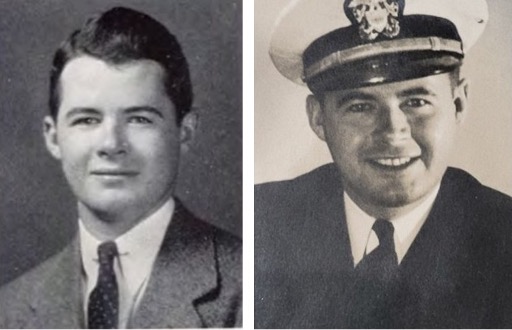
John Lovell Follansbee came to Trinity from F. E. Bellows High School in Mamaroneck, New York. He collided with freshman mathematics, lost his scholarship, majored in English and studied economics, regained his scholarship, and was a member of Psi Upsilon. He was active in the Jesters.
From Student to Seaman
A summer job opportunity presented itself – as a “workaway” on a merchant ship of the Isthmian Steamship Company. The pay was one cent per month, but lodging and meals (on the ship) were free. On his first voyage the SS Chattanooga City transited the Panama Canal and stopped at ports in California and Hawaii. Jack was thrilled by the travel. Another summer he called at ports in South America.
He was paid real money when he signed on as an entry-level Ordinary Seaman, and he was later certified as an Able Seaman. (He later admitted that he was “really a very ordinary able seaman but a rather able ordinary seaman.”) After graduation he made an eastbound voyage on the SS Steel Engineer. In 1939, with Germany and the United Kingdom at war, it was the last American ship to pass through the Suez Canal before the Roosevelt administration barred American ships from the Mediterranean. It took him to Aden, Karachi, Colombo, Madras, Calcutta, Capetown, and New Orleans.
In 1941 the Grace Lines took him on as a purser — handling a ship’s administrative and financial affairs, keeping the cash needed for transactions in foreign ports.
Four months after Pearl Harbor, he was purser on the SS Leslie carrying a cargo of sugar from Cuba to New York. The U-boats were already prowling the Atlantic coast, and the ship was torpedoed by U-123 off Cape Canaveral, Florida. A summary of the attack noted, “The torpedo struck on the starboard side abaft of amidships at the #3 hold. The explosion blew open the bulkheads, disabled the radio, ruptured tanks and flooded the shaft alley with sugar and water. The ship was stopped as she began listing heavily to starboard and then settled by the stern, leaving the deck awash in 15 minutes.” The crew, less four dead, took to lifeboats, raised sails, and landed north of the Cape Canaveral lighthouse two days later.
Operation Pedestal: Do-or-die to Malta
Four months later in a new ship, the SS Santa Elisa, he was in the vortex of the naval war in the Mediterranean. The British island of Malta, strategically located between Italy and North Africa, between air and naval bases in Mussolini’s Italy and the Afrika Corps in Libya, threatened Rommel’s supply lines. The island was relentlessly attacked for more than two years between June 1940 and Nov. 1942. The attacks reached their crescendo in the spring of 1942 when the island must receive supplies and fuel or surrender.
A small convoy of fourteen fast British and American merchant ships made the do-or-die run 900 miles through the western Mediterranean to supply and refuel the British island garrison. So great was the need, the fourteen merchantmen were shepherded by 45 vessels of the Royal Navy. They faced 21 Axis submarines and more than 400 aircraft.
Nine of the fourteen Allied merchant ships were sunk during Operation Pedestal; so were one British aircraft carrier and two cruisers. Jack watched the aircraft carrier HMS Eagle list – its aircraft sliding off the flight deck into the water — and sink in seven minutes by his wristwatch. More than a hundred crewmen died in those moments.
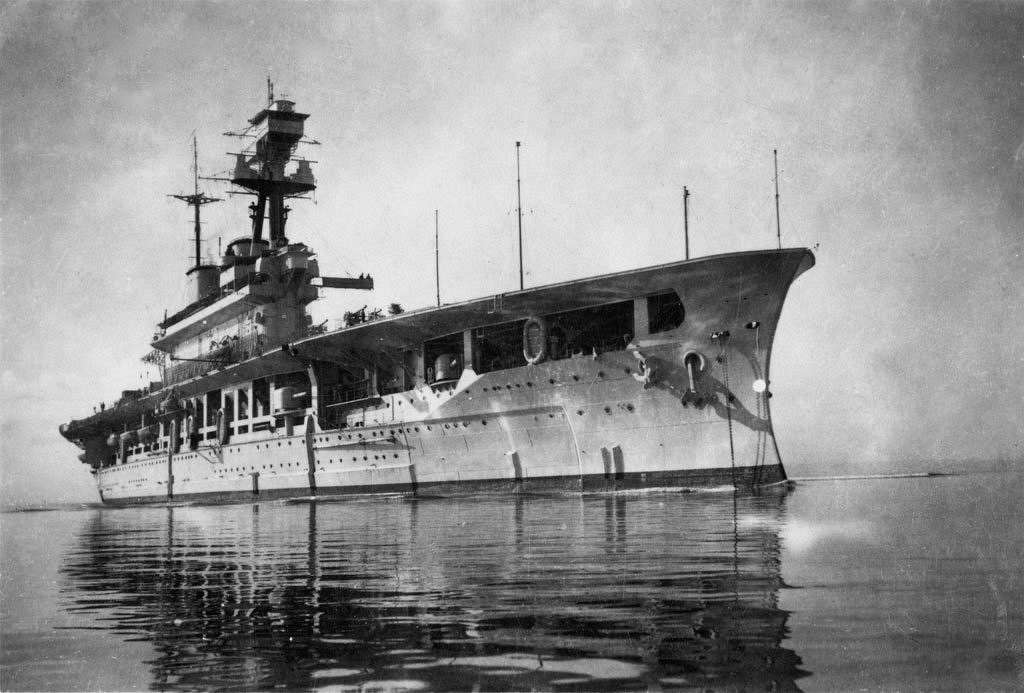
Jack’s Santa Elisa was carrying aviation gasoline. As the Luftwaffe attacked, Purser Follansbee was also a 20mm antiaircraft gun captain.
His ship was sunk off Cape Bon, Tunisia, in a night attack by Italian torpedo boats. The crew abandoned the vessel before it burst into flames and sank. That was Follansbee’s second time “rowing about the ocean.” A British destroyer, HMS Penn, picked up Follansbee and other survivors.
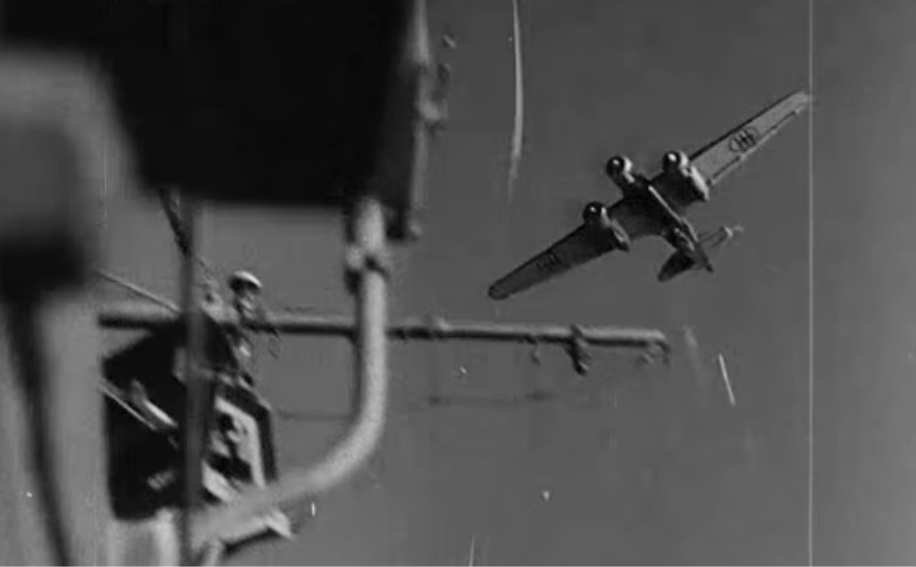
The naval vessel then rushed to aid the legendary SS Ohio, carrying kerosene and diesel fuel. The modern American tanker — the most critical ship in the convoy — had been requisitioned by the United Kingdom, and it had sailed into the Med with a British crew. It dodged the initial air attacks, but after it was hit by a torpedo from an Italian submarine, the vessel could not be steered. It survived more attacks by German and Italian bombers. Two German aircraft crashed on its decks. Its propulsion failed after internal explosions.
The British crew had been evacuated from the ship, so survivors of other ships that had been rescued by HMS Penn helped lash the Ohio between HMS Penn and HMS Bramham.
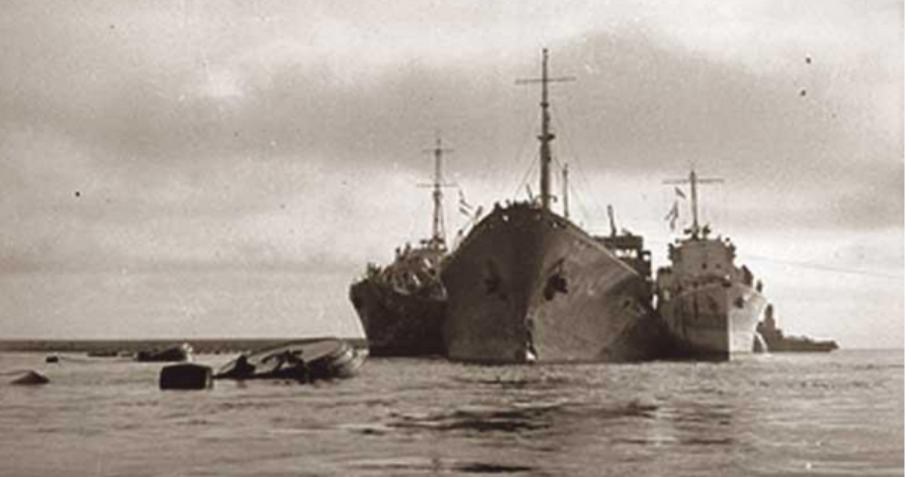
The destroyer HMS Ledbury and a minesweeper, HMS Rye, towed and steered the Ohio even as the tanker settled lower in the water. The ships limped toward Malta at a speed of only five or six knots. They endured more attacks by German dive bombers, the last inflicting more damage and tearing away the ship’s rudder.
During short lulls in the fighting, the pickup crew of British and American merchant seamen discovered that the Ohio’s storage lockers included such foods as oranges and hams – and whiskey. They took advantage. And they discovered a phonograph and an American record. They hooked them up to the ship’s loudspeakers.
British accounts of the battle note that as the vessel entered Valletta Harbor, the onshore band played “God Save the Queen,” “Rule, Britannia” and “The Star-Spangled Banner.” The music heard from the Ohio were the big band hits “Chattanooga Choo Choo” and “Elmer’s Tune.”
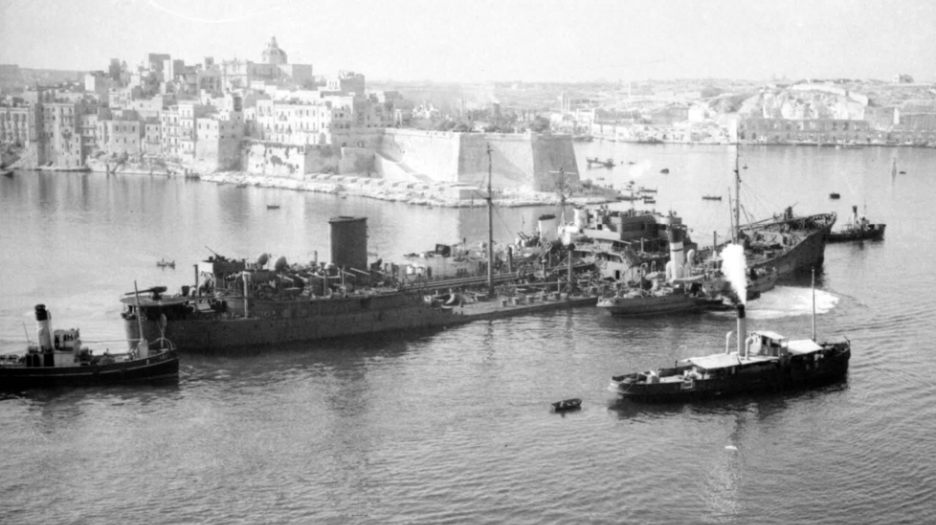
Nearly the entire population of Valletta crowded the waterfront as the SS Ohio arrived at the harbor. On the Church calendar, it was the feast of the Assumption of Our Lady, and devout Maltese had no doubt that the Blessed Mother had protected the ship in its hour — and Malta’s hour — of desperate need. Afterwards, when Jack walked on the town’s streets, local children called out “Convoy” to him.
After reaching New York he became chief purser on other ships that carried cargoes to North Africa for Operation Torch, West Africa, New Caledonia, and Guadalcanal.
In late 1944 Follansbee left the Merchant Marine and became a U.S. Navy officer in the Supply Corps. After Japan’s surrender he directed port operations in Kure and Hiroshima and served as a logistics officer in Tokyo. Of the latter, he said, “This had to be the softest berth in the Navy and there were plenty of soft ones as we all know. The ‘duty,’ if you could call it that, was such a breeze that I put in for and received 6 months extra ‘duty.’ Just one more reason, unfortunately, for our country’s current deficit.”
Despite regulations barring fraternization with the Japanese, he rented a room with a local family; more than 30 years later, when his daughter Betty visited the family, Jack’s Navy jacket was still in their closet.
In 1948 he married Elizabeth Wenger. He first started a company as a travel consultant. After he attended the Golden Gate School of Advertising in San Francisco, he made his career in advertising sales, first for newspapers and then as a partner in a specialized firm. He placed ads in such publications as Parade, Forbes, Interior Design, Environment and Popular Science.
Jack Follansbee led a long and productive postwar life, though memories of those murderous moments enroute to Malta stayed with him. According to his daughter, “the trauma probably never left him.” From time to time, he was a passenger on cruise ships. As a former seaman, purser, and wartime sailor — to Malta! — he could always talk his way onto the bridge and even take the helm.
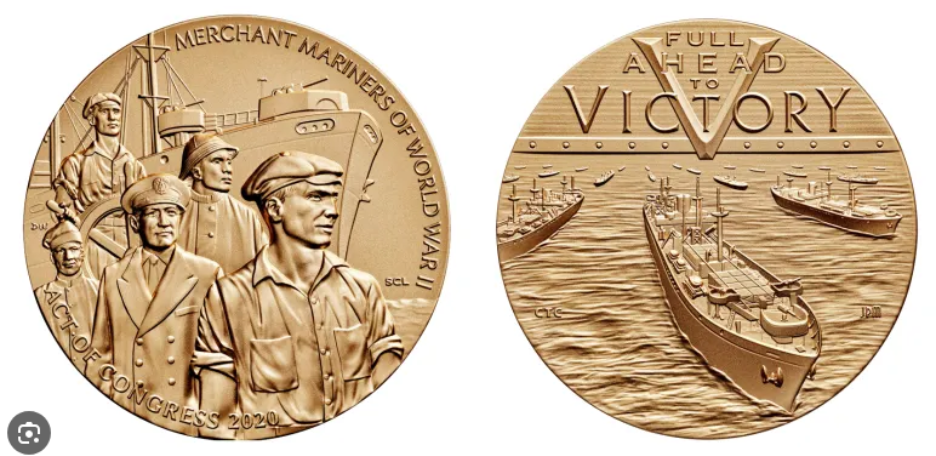
In 2020, by an act of Congress, the Merchant Mariners were awarded the Congressional Gold Medal.
_______________For more: Jack Follansbee is quoted in two important books on the battle – Operation Pedestal by Max Hastings and At All Costs by Sam Moses. He was interviewed in a documentary available on Youtube, “Malta Convoy, The Ohio.” The 1953 British feature film “The Malta Story” uses some actual footage of the Ohio’s arrival in Valletta harbor; the full movie is available on Youtube at https://www.youtube.com/watch?v=ME_b0E1ruck; begin at 1:19:57 through 1:22:05.



Great! But would actually have played Gid Save the King.