Despite speculation that the Hall would reopen this fall, its leaders want time to regroup.
Talia Cutler ’27
Editor in Chief
The Epsilon chapter of St. Anthony Hall, colloquially known as “the Hall,” will not relaunch until the fall of 2027. Initial 2023 reporting stated that its suspension was in place until June 30, 2026, however, the Hall’s leadership has announced plans to extend their recruitment timeline. There will be no new members inducted during this academic year.
Vice presiding officer of the Hall’s national governing board, James Harper, told the Tripod that “the lifting of the suspension marks the earliest date that the Hall can recruit and induct new members. We feel, however, that a thoughtful process requires more time than two weeks in September. Waiting until the fall of 2027 gives us time to host the kind of events that will help the organization develop an image that is consistent with our goals.”
Now that the suspension has been lifted, St. Anthony Hall faces the task of reestablishing itself within a student body generally unfamiliar with their organization. However, the Hall is “taking advantage of the suspension to do a thoughtful re-start,” Harper said, considering the year interim as a chance to “articulate who we are and what we are to an audience that does not know us.”
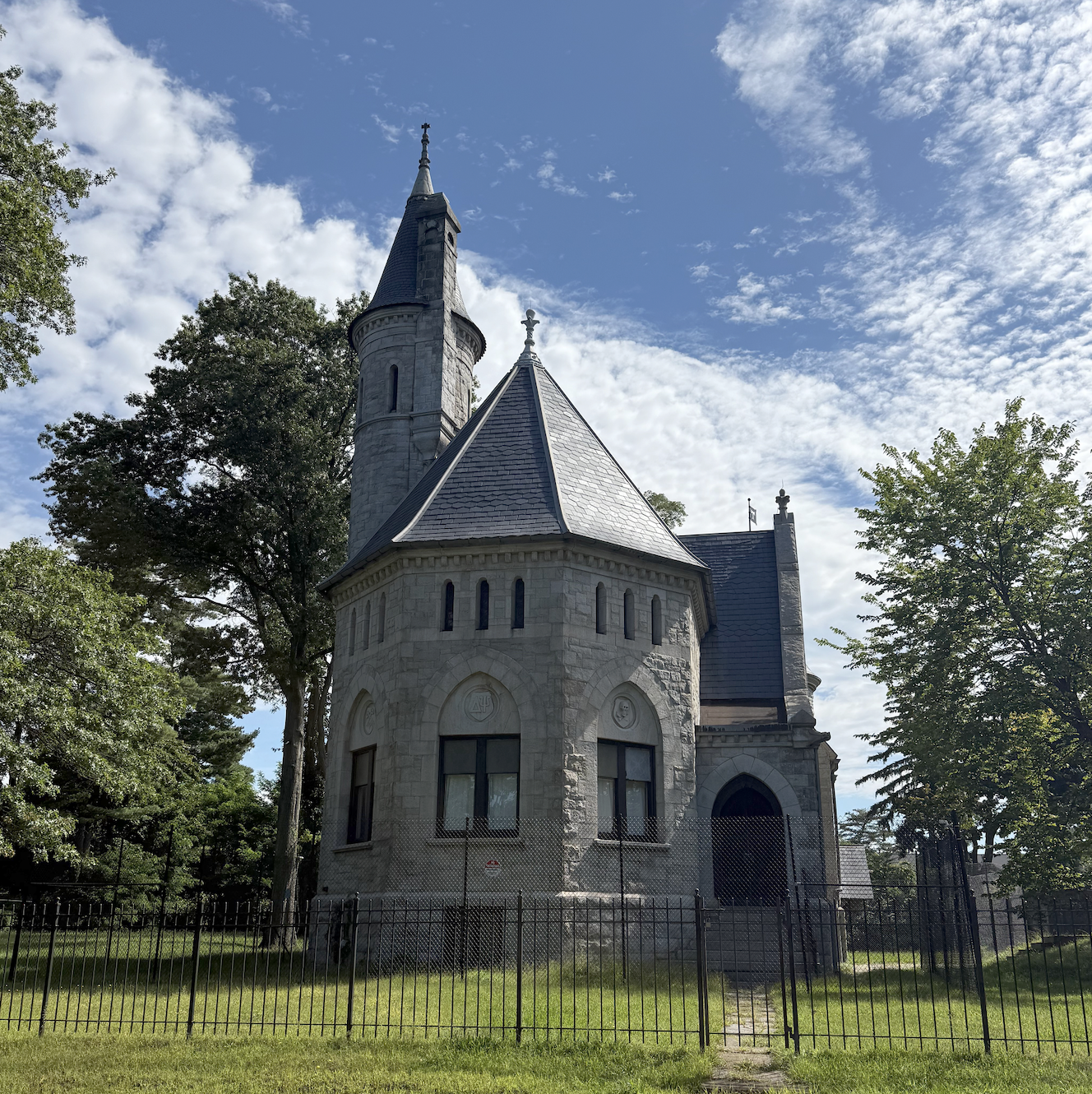
St. Anthony Hall, which bears the Greek letters Delta Psi, is a co-ed fraternity that previously occupied the Ogibly Hall dormitory and St. Anthony Hall, the gothic castle-like building at the top of Summit Street. St. Anthony Hall is the oldest fraternity building on campus, and one of the oldest buildings at Trinity College. The Hall was known for its late nights, opening at 2 a.m. after other fraternities on campus had closed. It was chartered in 1850, making it one of the oldest continuously recognized fraternity chapters, and the oldest at Trinity College. It is the oldest building in America to have been purpose-built as a fraternity. The chapter was suspended July 13, 2023, after an investigation into hazing practices.
The suspension was a mutual decision made by the College, the National Fraternity and the Saint Anthony Trust of Hartford (SATH), the three signatories of the tripartite agreement. The Tripod’s previous reporting in 2023 called the three-year suspension the “most severe in recent college history.”
Former Tripod News Editor Caitlin Doherty ’26 first reported that the reasons for the suspension included an incident in which three swastikas were carved into a member’s door, as well as physical altercations between members of the Hall and Alpha Delta fraternity in 2020.
Harper told the Tripod that while these incidents indicated a decaying culture within the institution, the root cause of the suspension was hazing. The students involved in the hazing incidents have either been expelled from the national fraternity or suspended for a “good long time,” Harper said. They will not be involved in the recruitment process.
Harper, along with the national presiding officer of St. Anthony Hall, Alice Rha, previously co-signed a letter to the editor in the Tripod asserting that any students claiming to be “lead[ing] the re-start of the Hall” are “by definition, imposter[s].”
“The tripartite agreement explicitly forbade any recruitment during the period of the suspension. And we all take formal agreements very seriously; that’s an ethical position. So anyone representing themselves as the next generation of the Hall was acting in a rogue manner,” Harper said. “We are interested in doing our own recruitment and developing our own identity; we are not interested in having someone else do that for us.”
SATH, which acts as the Epsilon chapter’s primary contact and first line of support, avoided communicating with the undergraduate community in accordance with the tripartite agreement. “It may seem that because we were being quiet during the suspension, there was no plan. In that vacuum, people’s imaginations went wild.” Harper told the Tripod.
“By writing that letter to the editor, we wanted to make sure that students at Trinity College didn’t just assume that the fix was in and future membership was already decided. We want people to feel like anybody potentially has a shot at this — it’s not prescripted.”
Harper emphasized that for recruitment, the SATH board is focused on “finding the most interesting people […] We want whip-smart. We want iconoclastic.”
As for why there was such a prevalence of students prematurely claiming to be involved in the Hall, “that’s an easy question to answer,“ Harper said. “The Hall has a stunning historic building, a certain social mystique and a vast network of influential alumni. It’s not surprising that some ambitious undergraduates might want to reach out and try to help themselves to all that.” When recruitment begins, the process will be run by SATH.
When the Hall does return to Trinity’s campus, it will not be within the Greek system. Under the tripartite agreement, “Epsilon expects to return in Fall 2027 as a coeducational literary society,” president of SATH Andrew Whitney told the Tripod. Whitney disclosed that “Newly recruited members will be held to a 3.333 cumulative GPA standard […] and candidate class sizes will be limited as part of a phased return to full chapter activity.”
The reinstatement timeline targets the fall of 2029 that the chapter operates at its previous scale. Additionally, the Epsilon chapter’s social gatherings will “not [be] in the form people remember,” and be “smaller, structured, and invitation-based,” according to Whitney. He clarified that this design, rather than larger late-nights, “demonstrate[s] the culture change this reinstatement is built on.”
SATH’s mission for St. Anthony Hall’s Epsilon chapter is not only to ensure systems of “anti-hazing training, alumni oversight, a phased undergraduate transition,” but also to “offer a healthy and constructive environment for intellectual and artistic development that values diverse individual views and that seeks stimulating debate and exploration.” Whitney told the Tripod, adding that “It’s been a genuine pleasure working with Trinity.”
Mike Bodenarik, director of Greek life at Trinity, declined to comment, as did Joe DiChristina, special advisor to the president. “We will soon communicate with all students about the next steps,” DiChristina wrote to the Tripod.
“We want to turn the page on the unacceptable recent past and return to the origins of the chapter,” Whitney said. “We’re optimistic about where this lands for the Hall in 2027.”
This story will be updated to allow for administrative communication.