





Iqra Athar ’26
Executive News Editor
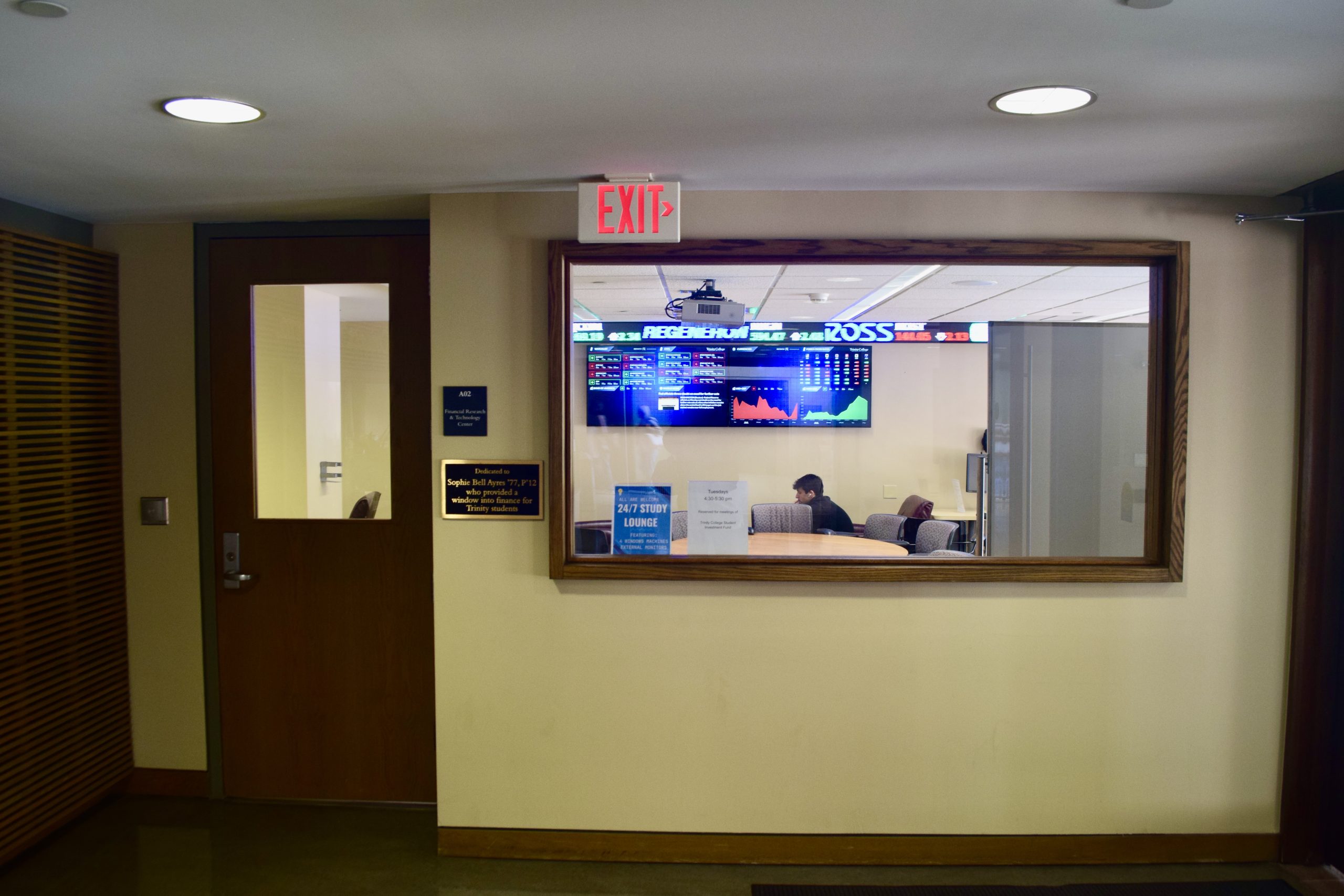
Over the summer, Trinity College reduced its Bloomberg terminals in the library from 12 machines to one, citing ongoing budget cuts. The change followed six to eight months of consultation with the Student Investment Fund (TCSIF) and economics professor Christopher Hoag, according to administrators.
Bloomberg terminals have long been a central resource for students pursuing finance, economics and related fields. The original expansion from one to twelve machines was supported by one-time donor funds, but the investment was never fully endowed. Each terminal costs between $25,000 to $30,000 annually, and the previous setup amounted to more than $80,000 a year. The pricing structure also contributed to the all-or-nothing reduction: purchasing three terminals includes nine additional ones at no cost, making it financially impractical to maintain ten or fewer machines, according to Kristen Eshleman, vice president of Library and Information Technology Services (LITS).
Eshleman further explained that the decision was guided by stewardship of resources. “When we make cuts, we look at the things that have the broadest impact on the core mission,” she said. “The Bloomberg lab’s primary use was for certifications which can now be done online. We were able to reduce costs and still meet the same number of certifications every year.” To ensure continuity, the College has funded 40 annual Bloomberg Market Concepts certifications, exceeding the average of about 30 completed each year. These certifications cost roughly $150 per student and are available online or at the single terminal in Raether Library, room A14.
Initially, TCSIF managed distribution of certification codes, but after further review, LITS recently shifted this responsibility to the help desk to avoid potential barriers to access. Students can reserve the single terminal in the Bloomberg Lab on a checkout basis. “The real question is whether students can get the time they need on the machine when they need it,” Eshleman noted, adding that her team will monitor the effectiveness of the new system throughout the year.
Academically, the economics department continues to adjust. Eshleman said Professor Chris Hoag, a primary faculty user of the lab, is revising his J-Term course accordingly. She emphasized that while LITS continues to support the lab as it does other campus facilities, decisions about alternative tools or future investments would originate from the TCSIF or academic departments. The Tripod sought comment from the economics department and the TCISF; the Fund said it would refrain from comment at this time, but expressed appreciation for administrative support during the transition and indicated it would share updates as they become available. More details, including instructions for reserving the terminal and requesting certification codes, are available on the LITS Bloomberg webpage.
+ There are no comments
Add yours