





Sajja Ranjit ’29
News Editor
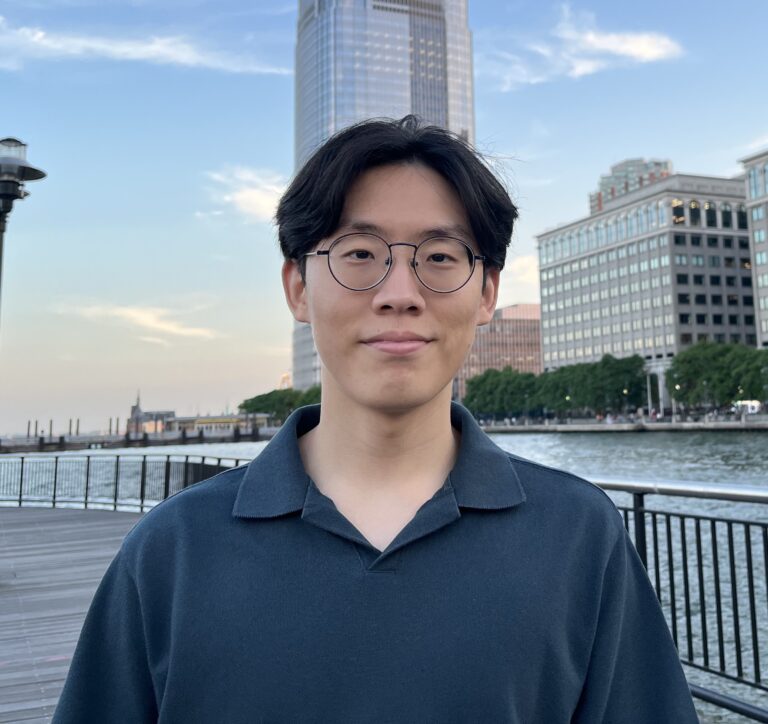
When Ki Hwang ’26 first arrived at Trinity College from Seoul, South Korea, he wasn’t entirely sure what to expect. “I didn’t have a lot of choices,” he said. Having attended a Korean high school and not taken standardized tests such as the SAT or AP exams, Hwang applied to a limited set of American universities.
Trinity stood out for one unique reason: “It was a liberal arts school that has an engineering department, I heard that’s pretty rare.” he said. What began as a practical decision quickly turned into something more meaningful. “It was way better than I expected,” Hwang said, pointing to Trinity’s research opportunities and career resources as defining parts of his experience.
Hwang’s academic journey didn’t follow a straight line. He entered Trinity intending to study psychology, driven by a deep curiosity about the human mind. “I wanted to understand consciousness, maybe even simulate it with computers,” he explained. But over time, he found that Trinity offered stronger resources in other areas that aligned more with his interests. That shift became concrete after his sophomore summer, where he did an internship working with data analytics at the investment bank Jefferies. “There I learned that the area of quant finance gauges all math, computer science, and a bit of finance. And I thought that might be interesting” he said. From there, Hwang transitioned into a double major in mathematics and computer science, preparing himself for a career in quantitative finance.
Outside the classroom, Hwang found community and growth through the Aetna Quantitative Center, where he has worked as a tutor for over two years. “Talking about technical terms with other people was not easy for me, but I learned a lot of skills doing that,” he said. The experience helped him become more confident not only academically, but also in professional settings like internships. Additionally, as a student representative on the curriculum committee, he helped advocate for the adoption of the Tuck business bridge program at Trinity. “At first, it was unlikely to be adopted,” he recalled. “But I talked to faculty, surveyed students, and tried to advocate for it.” The program is now a recurring January offering, and Hwang was involved in early conversations supporting its adoption.
Research has also played a major role in shaping Hwang’s time at Trinity. Beginning in his junior spring, he worked with Associate Professor of Mathematics Lina Ma on a project focused on solving partial differential equations using numerical methods, essentially designing algorithms to simulate real world phenomena like fluid dynamics. “First we come up with a mathematical model, then we put it into a computer and evaluate whether the simulation is accurate,” he explained. His work led him to present at a regional workshop, an experience he described as both challenging and rewarding.
One of the most impactful courses in Hwang’s academic journey was Probability taught by Assistant Professor of Mathematics Victor Churchill. “That course helped me understand real-life phenomena in a mathematical framework,” he said. It also laid the foundation for advanced courses like mathematical statistics and stochastic calculus, and even helped him prepare for internship interviews.
More recently, Hwang has been involved in a senior project in collaboration with the entrepreneurship center and Connecticut Children’s Medical Center. His team is developing a retrieval-augmented generation system, a tool designed to help pediatricians quickly access treatment information. “It’s like a chatbot that helps doctors find answers faster,” he said. The project represents what Hwang values most about his Trinity experience: applying technical skills to real-world problems.
After graduation, Hwang will be returning to Jane Street, a quantitative trading firm where he previously interned. There, he’ll work on building infrastructure tools for traders, an opportunity that combines both his math and computer science expertise. “I’ve always kind of aspired to work there,” he said. Looking ahead, he hopes to eventually launch his own startup after gaining industry experience.
As he prepares to leave Trinity, Hwang says he’ll miss the community most. “Friends, definitely, and just walking around campus,” he said. He also emphasized the accessibility of professors, describing them as “so friendly and willing to help.” Reflecting on his journey, Hwang offers simple advice to underclassmen: take initiative early. “Participate in as many programs and clubs as possible,” he said. “There are a lot of resources, but you have to look for them.”
For incoming students considering Trinity, his message is reassuring. “Even if you don’t know what you want to do, you can figure it out here,” he said. “The professors and your peers will help you navigate that.”


+ There are no comments
Add yours